Introduction
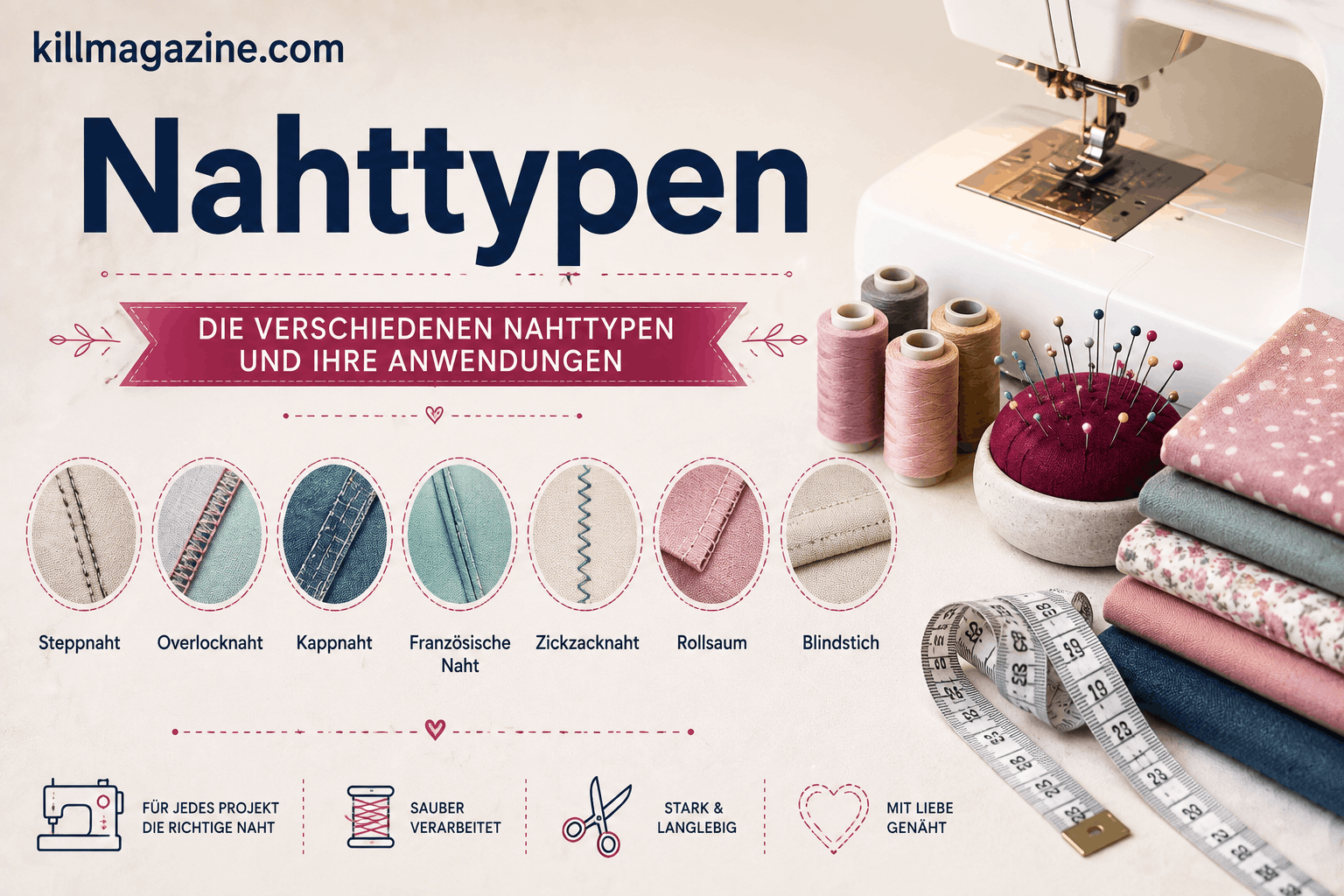
Sewing is both a creative skill and a technical craft. Whether you are making a simple shirt, designing a dress, creating home décor, or producing professional garments, the way fabric pieces are joined together has a major effect on the final result. This is where Nahttypen becomes important.
Nahttypen is a German term commonly used to describe different types of seams. A seam is the area where two or more pieces of fabric are joined. While a seam may look like a simple line of stitching, its construction can influence strength, flexibility, comfort, appearance, and durability.
Choosing the right seam depends on several factors, including fabric weight, texture, stretch, garment design, expected wear, and the desired finish. A seam that works well for lightweight cotton may not be suitable for denim or stretch jersey.
This guide explains the most common Nahttypen, their characteristics, applications, benefits, limitations, and practical considerations. Understanding these seam types can help beginners develop better sewing skills while giving experienced sewists a useful reference for selecting the right construction technique.
What Does Nahttypen Mean?
The word Nahttypen can be understood as “seam types.” In textile and garment construction, it refers to the different methods used to join, reinforce, or finish fabric.
A seam is more than just stitching. The way fabric layers are positioned, folded, overlapped, enclosed, or finished determines the behavior of the finished connection.
Some seams are designed mainly for strength, while others focus on comfort or appearance. Certain constructions are particularly useful for delicate fabrics, while others are better suited to heavy-duty garments.
Common examples include:
- Plain seams
- French seams
- Flat-felled seams
- Overlock seams
- Flat seams
- Lapped seams
- Bound seams
- Decorative seams
- Piped seams
Learning the differences between these Nahttypen makes it easier to understand garment construction and choose an appropriate method for each project.
Why Are Nahttypen Important?
Seam construction plays an important role in how a garment performs throughout its useful life.
Strength and Durability
Some parts of clothing experience repeated stress from movement and daily use. Seams around shoulders, armholes, pockets, trouser areas, and other high-stress sections need suitable construction.
A properly selected seam can distribute stress and help reduce premature failure.
Comfort
The inside of a garment can affect how comfortable it feels. Bulky or poorly finished seams may feel unpleasant against the skin.
Flat or carefully finished seams can provide a smoother interior, which is especially useful for sportswear and garments worn for extended periods.
Appearance
Seams can also contribute to the visual identity of a garment. Decorative stitching, visible topstitching, and carefully finished interiors can make clothing look more professional.
Fabric Protection
Many woven fabrics have raw edges that can fray. Seam construction and finishing techniques can help protect these edges and keep the garment looking neat.
Flexibility
Stretch fabrics require suitable seam construction because the garment needs to move with the wearer. A rigid seam may interfere with the natural stretch of the fabric.
Main Types of Nahttypen
Different seam classifications exist, but several constructions are particularly useful in everyday sewing and garment production.
1. Plain Seam
The plain seam is one of the simplest and most commonly used Nahttypen.
After sewing, the seam allowances may be pressed open or toward one side.
Plain seams are commonly used for:
- Shirts
- Dresses
- Skirts
- Trousers
- Linings
- Home sewing projects
- General woven garments
The main advantage of a plain seam is versatility. It is relatively simple to sew and can be adapted to many different projects.
However, the raw edges may need additional finishing because some fabrics can fray easily.
2. French Seam
A French seam is an enclosed seam designed to hide the raw edges of fabric. It is especially useful when the inside of a garment needs to look neat and when working with lightweight materials.
French seams are commonly associated with:
- Chiffon
- Lightweight cotton
- Silk
- Fine blouses
- Delicate dresses
- Sheer fabrics
The construction involves sewing the fabric in stages so that the raw edges become enclosed within the finished seam.
Advantages of French Seams
The main benefits include:
- Clean interior appearance
- Enclosed raw edges
- Reduced visible fraying
- Professional-looking finish
Limitations
Because several layers of fabric can be present within the seam, French seams may create unnecessary bulk when used with thick fabrics.
They also require more time and precision than a basic plain seam.
3. Flat-Felled Seam
The flat-felled seam is well known for its strength and durability. It encloses the raw edges and creates a relatively secure construction.
This seam is commonly associated with:
- Jeans
- Denim garments
- Workwear
- Uniforms
- Durable shirts
- Outdoor clothing
One recognizable feature is the possibility of visible parallel lines of stitching on the outside.
Benefits
Flat-felled seams can provide:
- Strong construction
- Enclosed raw edges
- Good resistance to wear
- A professional appearance
- Additional reinforcement
The primary disadvantage is that the construction can be more time-consuming and may create additional bulk.
4. Overlock Seam
An overlock seam is commonly produced with an overlock or serger machine. This type of machine can stitch and finish fabric edges efficiently.
Overlock construction is particularly common in:
- T-shirts
- Jersey garments
- Knitwear
- Casual clothing
- Stretch garments
- Mass-produced apparel
The stitching helps secure the fabric edge while creating a neat finish.
Why Use an Overlock Seam?
It is efficient, especially when working with fabrics that require edge finishing. It can also provide useful flexibility for many knitted fabrics.
However, proper machine settings are important. Incorrect tension or feeding can cause the fabric to stretch, ripple, or become distorted.
5. Flat Seam
A flat seam is designed to keep the seam construction relatively flat. This makes it particularly useful when comfort and reduced bulk are important.
Flat seam constructions can be found in:
- Activewear
- Sportswear
- Underwear
- Performance garments
- Stretch clothing
A low-profile seam can reduce rubbing and help clothing feel more comfortable during movement.
The exact construction varies depending on the machine and garment design, so the term can describe several related techniques.
6. Lapped Seam
A lapped seam is created when one fabric layer overlaps another before the layers are secured.
This construction can be useful when strength and stability are important.
Lapped seams may appear in:
- Heavy garments
- Denim
- Utility clothing
- Leather-related projects
- Technical textile applications
One advantage is that the overlapping structure can provide a strong connection. The seam can also create an intentional visual detail.
7. Bound Seam
A bound seam uses a separate strip of fabric or binding to cover the raw edge.
The result can be both functional and decorative.
Bound seams are useful for:
- Unlined jackets
- Garment interiors
- Bags
- Home textiles
- Tailoring
- Decorative projects
A well-executed bound seam can make the inside of a garment look polished and carefully constructed.
Hong Kong Finish
The Hong Kong finish is a popular example of bound seam finishing. Bias-cut fabric strips are used to cover seam allowances, producing an attractive and refined interior.
This technique can be particularly useful when the garment is unlined and the inside will be visible.
8. Piped Seam
A piped seam incorporates piping into the seam. Piping can contain a narrow cord covered with fabric and is normally positioned so that it becomes a visible design feature.
Piping is commonly used for:
- Cushions
- Bags
- Upholstery
- Jackets
- Dresses
- Decorative textile projects
It can emphasize edges and create a stronger visual separation between fabric sections.
Unlike purely functional seam construction, piping often has an important decorative purpose.
9. Decorative Seam
Some seams are created partly or primarily for visual effect.
Decorative seams can include:
- Topstitching
- Double rows of stitching
- Contrast stitching
- Decorative panel seams
- Specialty stitching
Denim garments provide a familiar example because visible stitching can contribute to both appearance and structural reinforcement.
Decorative stitching should still be appropriate for the fabric and location. A design detail should not compromise the garment’s function.
Nahttypen and Different Fabrics
One of the most important sewing principles is that fabric characteristics should influence seam selection.
| Fabric Type | Suitable Seam Types | Main Consideration |
| Lightweight cotton | Plain, French | Keep construction neat |
| Silk | French, narrow seams | Reduce bulk |
| Chiffon | French | Enclose delicate edges |
| Denim | Flat-felled, lapped | Strength and durability |
| Jersey | Overlock, flat | Stretch and flexibility |
| Sportswear fabric | Flatlock, overlock | Movement and comfort |
| Medium-weight cotton | Plain, bound | Versatility |
| Heavy fabric | Lapped, flat-felled | Strong construction |
These recommendations are general. Fabric blends, weave structure, stretch percentage, and garment design can change which seam works best.
How to Choose the Right Nahttypen
Selecting a seam should be a deliberate decision rather than simply using the same method for every project.
Consider Fabric Weight
Light fabrics can become bulky if too many layers are introduced. Heavy fabrics may require stronger construction to withstand stress.
Consider Stretch
Stretch fabrics need a seam that can accommodate movement. Flexible stitching methods are often more suitable than rigid constructions.
Consider Fraying
If the fabric frays easily, an enclosed seam or appropriate edge-finishing method may be beneficial.
Consider Garment Purpose
Everyday clothing, sportswear, formal clothing, workwear, and accessories can have different performance requirements.
Consider Appearance
Ask whether the seam will be visible. If it is, the stitching should complement the overall design.
Consider Comfort
For garments worn close to the body, minimizing bulky seams can improve comfort.
Seam Finishing and Nahttypen
Seam construction and seam finishing are closely related but are not exactly the same thing.
A seam joins fabric pieces, while seam finishing deals with the edges and appearance of the seam allowance.
Common finishing methods include:
- Zigzag stitching
- Overlocking
- Binding
- Pinking
- Enclosed seams
- Specialized edge finishes
The correct choice depends on the material and intended result.
For example, a plain seam may provide an excellent structural connection, but the raw edges may still require finishing.
The Role of Pressing in Seam Quality
Pressing is one of the simplest ways to improve sewing results.
After stitching, carefully pressing the seam can help it sit correctly and improve the appearance of the finished garment.
Pressing can help:
- Flatten seam allowances
- Improve garment shape
- Reduce wrinkles
- Create cleaner edges
- Prepare fabric for topstitching
It is important to distinguish pressing from ironing. Pressing generally involves placing the iron on the fabric and lifting it rather than repeatedly moving it across the material.
Common Mistakes When Using Nahttypen
Understanding seam types is useful, but proper execution is equally important.
Using One Seam for Every Fabric
A seam suitable for denim may be inappropriate for delicate fabric. Always consider the material before choosing a construction.
Ignoring Seam Allowance
Incorrect seam allowances can affect garment dimensions and cause pieces not to match correctly.
Skipping Fabric Tests
Testing a seam on a scrap of the actual fabric can reveal problems before they affect the finished garment.
Neglecting Pressing
Even accurate stitching can look untidy without proper pressing.
Choosing Appearance Over Performance
A beautiful seam still needs to perform its intended function. High-stress areas should receive appropriate construction.
Using Incorrect Machine Settings
Thread tension, stitch length, needle selection, and machine feeding can influence seam quality.
Practical Tips for Beginners
If you are new to sewing, you do not need to master every Nahttypen immediately.
Start with a plain seam and learn how to sew accurately. Then practice basic seam finishing before moving to French seams, flat-felled seams, and other constructions.
A useful practice routine is:
- Select several fabric scraps.
- Mark consistent seam allowances.
- Sew a plain seam.
- Practice pressing it open.
- Try an enclosed seam.
- Test a stronger seam construction.
- Compare the results.
- Wash or gently handle samples when appropriate.
- Examine both sides of each sample.
- Record which technique works best for each fabric.
This approach helps develop practical judgment rather than relying only on memorized definitions.
Nahttypen in Professional Garment Production
In professional textile manufacturing, seam selection is part of the larger process of garment engineering.
Manufacturers consider:
- Fabric properties
- Production speed
- Seam strength
- Stitch type
- Garment design
- Quality requirements
- Comfort
- Cost
- Durability
Standardized seam classifications can also help textile professionals describe construction consistently.
Professional production may use specialized machines for different seam operations. This allows factories to achieve consistent stitching, efficient production, and predictable quality.
Even though industrial equipment can be more advanced than household sewing machines, the fundamental principle remains the same: the seam should be appropriate for the fabric and purpose.
Nahttypen for Sustainable Sewing
Good seam selection can also contribute to longer-lasting garments.
When a garment is constructed with suitable seams and properly finished edges, it may withstand regular use more effectively. Durable construction can reduce the need for frequent repairs or premature replacement.
For people interested in sustainable sewing, useful practices include:
- Choosing durable construction where appropriate
- Repairing damaged seams
- Avoiding unnecessary fabric waste
- Testing techniques before cutting expensive fabric
- Selecting seam types based on garment purpose
- Maintaining finished garments properly
Sustainability is not achieved by using one particular seam. Instead, it involves thoughtful choices throughout the design, construction, use, and repair process.
Nahttypen: Quick Comparison
| Seam Type | Strength | Appearance | Best Use |
| Plain Seam | Moderate | Simple | General garments |
| French Seam | Moderate | Very neat | Lightweight fabrics |
| Flat-Felled Seam | High | Distinctive | Denim and workwear |
| Overlock Seam | Good | Clean | Knit and casual garments |
| Flat Seam | Good | Low-profile | Sportswear |
| Lapped Seam | High | Visible | Heavy materials |
| Bound Seam | Good | Refined | Garment interiors |
| Piped Seam | Variable | Decorative | Fashion and home textiles |
Frequently Asked Questions
What does Nahttypen mean?
Nahttypen is a German term referring to different types of seams. In sewing, it describes the various methods used to join or finish fabric.
Which Nahttypen is best for beginners?
A plain seam is generally a good starting point because it is straightforward and suitable for many basic sewing projects.
Which seam is suitable for delicate fabrics?
French seams are commonly used for lightweight and delicate fabrics because they enclose raw edges and provide a neat interior finish.
What seam is commonly used for jeans?
Flat-felled seams are strongly associated with jeans and other durable garments because they provide a robust construction and can hide raw edges.
Why is seam finishing important?
Seam finishing helps control raw fabric edges, reduce fraying, improve appearance, and contribute to the overall durability of a garment.
Can the same seam be used for every fabric?
No. Seam selection should consider fabric weight, stretch, fraying behavior, garment design, comfort, and durability requirements.
Disclaimer
This article is intended for general educational purposes and provides an overview of Nahttypen and common sewing seam constructions. The best seam for a particular project may vary depending on the fabric, pattern, equipment, and intended use. Always test a new technique on a fabric sample before using it on a finished garment.
Conclusion
Understanding Nahttypen provides a strong foundation for better sewing and garment construction. Seams influence much more than the way two pieces of fabric are connected. They affect durability, flexibility, comfort, appearance, and the overall quality of a finished project.
The plain seam remains one of the most versatile choices, while French seams are useful for delicate fabrics and clean interiors. Flat-felled seams are valued for durable garments, overlock seams are practical for many knit fabrics, and flat seams can provide comfort in performance clothing. Bound, lapped, piped, and decorative seams offer additional options for specialized construction and design.
The most important lesson is that there is no single “best” Nahttypen for every project. The right choice depends on the fabric, garment, stress level, desired appearance, and practical requirements.
By practicing different seam constructions, testing fabrics before starting a project, paying attention to seam allowances, and pressing carefully, beginners can gradually develop the judgment needed to choose the right technique. With experience, understanding Nahttypen becomes an essential part of creating garments that are attractive, comfortable, durable, and professionally finished.