
Advanced base camp, often called ABC, is a higher camp that climbers set up above the main base camp on a big mountain. It gives climbers a place to rest, store gear and prepare for the upper part of the climb. Also, it plays a key part in acclimatisation, because climbers can spend nights higher up and then return lower down to recover.
For many UK climbers, advanced base camp is a term they first meet when they read about Mount Everest. However, climbers also use the idea on other high peaks, such as Cho Oyu and Broad Peak. In short, ABC is not one fixed place: it is a stage in a climb, between base camp and the higher camps near the summit.
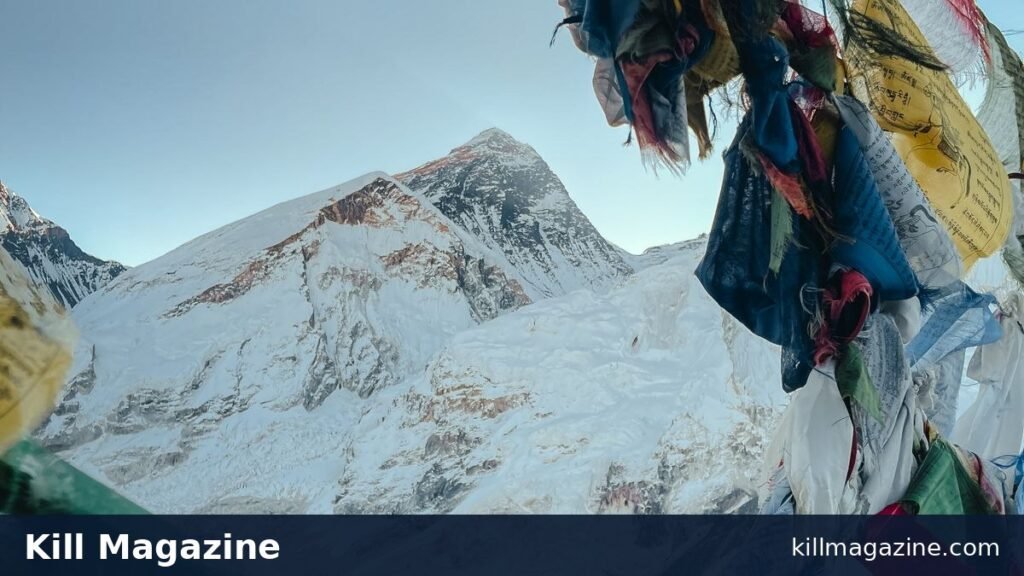
What Is an Advanced Base Camp?
An advanced base camp sits higher than base camp, often by 1,000 metres or more. Climbers carry food, fuel, tents and oxygen there, and they use it as a forward store. As a result, they do not need to carry every load from base camp to the high camps in one push.
On Everest, for example, the famous advanced base camp on the north side in Tibet sits at about 6,400 metres on the Rongbuk Glacier. Climbers reach it after several days from base camp, and they spend time there before they move to the higher camps. You can read an overview of the mountain on Wikipedia: Mount Everest.
Advanced Base Camp on Everest
On the south side of Everest in Nepal, climbers start at Everest Base Camp at about 5,364 metres. They then cross the Khumbu Icefall to Camp 1, and they move higher in stages. On the north side, by contrast, the route runs from base camp to intermediate camp and then to advanced base camp at 6,400 metres.
- Base camp: the main camp, with dining tents, medical help and communications.
- Advanced base camp: a higher store and rest camp, often at 6,000 metres or more.
- High camps: Camp 1, Camp 2 and Camp 3, closer to the summit.
- Summit push: climbers leave the top camp at night and climb for the summit.
Climbers do not stay at advanced base camp for the whole trip. Instead, they climb high and sleep low, a method that helps the body adapt to thin air. For example, a climber may spend two nights at ABC, then drop back to base camp for rest before the next rotation.

What Do Climbers Keep at Advanced Base Camp?
At advanced base camp, climbers and their support teams keep tents, sleeping bags, food, cooking gas, spare oxygen and medical kits. In addition, many expeditions set up a small mess tent and a radio link to base camp. Sherpas and porters carry much of this gear, and they play a vital part in every Everest expedition.
Conditions at ABC are harsh. Temperatures can fall well below freezing at night, winds can reach gale force, and the air holds only about half the oxygen of sea level. As a result, simple tasks feel hard, and climbers must drink, eat and rest with care. Our guide to youth expedition projects looks at how young people can start with smaller, safer expeditions.
How to Prepare for an Advanced Base Camp Trip
First, build fitness over many months with hill walking, running and strength work. Second, gain experience on smaller mountains in Scotland, Wales, the Alps or the Himalayas. Finally, learn rope work, crevasse rescue and how to use crampons and an ice axe.
- Train for 6 to 12 months before a high-altitude trip.
- Climb peaks above 5,000 metres first, such as Kilimanjaro or Island Peak.
- Learn about altitude sickness and its warning signs.
- Choose a licensed operator with experienced guides.
- Budget carefully: a guided Everest trip can cost £30,000 to £50,000 or more.
The British Mountaineering Council offers advice on training and safety, and you can find it on the British Mountaineering Council website. Also, always check travel advice and insurance before you book, because high-altitude climbing needs specialist cover.
Is Advanced Base Camp Right for You?
Advanced base camp is a key part of big-mountain climbing, but it is not a place for a first mountain trip. It suits fit, experienced climbers who have trained for altitude and who understand the risks. For most walkers, however, a trek to Everest Base Camp offers the same views with far less risk, and it still gives a real taste of the Himalayas.
In short, advanced base camp is the staging post that makes a summit attempt possible. It stores the gear, shelters the climbers and gives the body time to adapt. Without it, climbers would face a much longer, harder push from base camp to the top.
Leave a Reply