Introduction
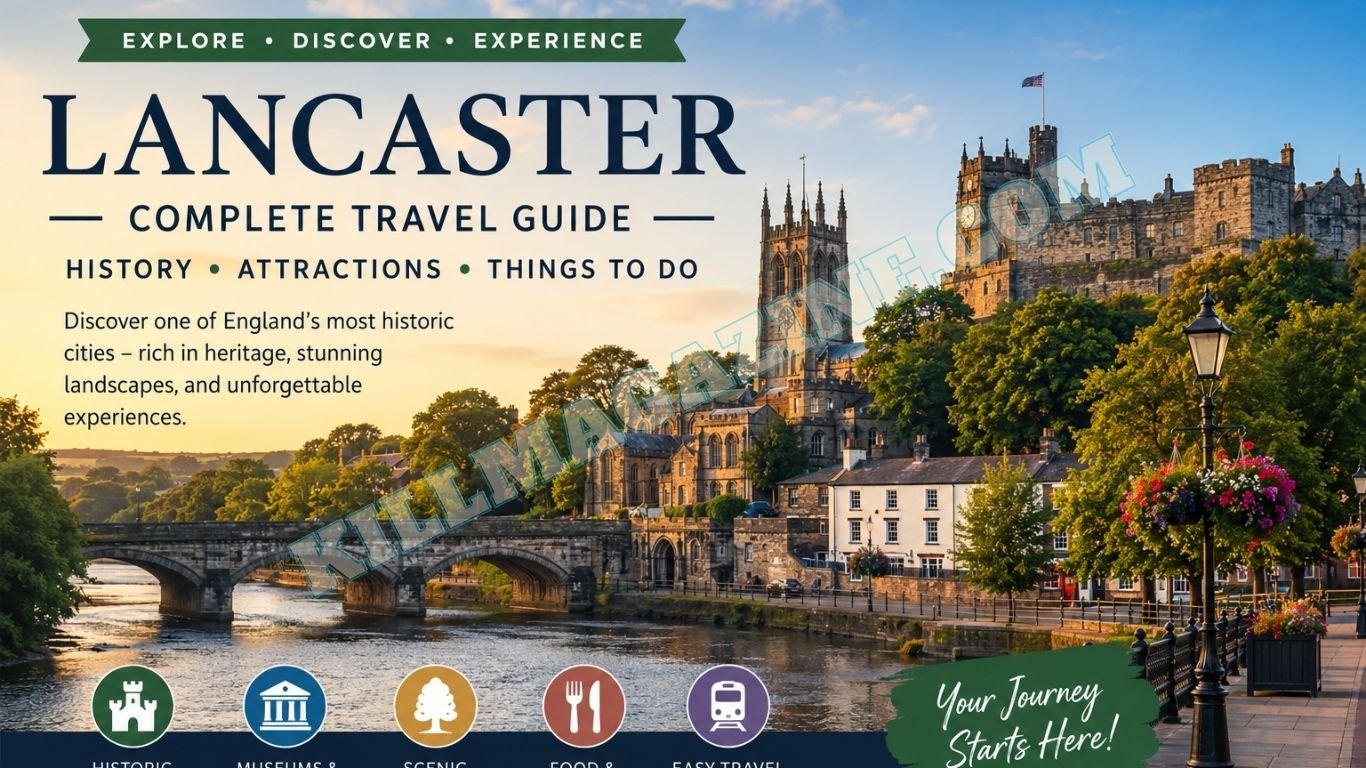
Lancaster is one of England’s most beautiful historic cities, offering a perfect mix of medieval heritage, stunning architecture, scenic landscapes, and modern attractions. Located in Lancashire on the banks of the River Lune, this compact city has played an important role in British history for nearly 2,000 years. From Roman forts and royal castles to museums, canals, and lively festivals, Lanc aster has something for every visitor.
Whether you’re planning a weekend getaway, exploring northern England, or looking for a fascinating historical destination, Lancaster is well worth visiting. Its walkable streets, welcoming atmosphere, and easy access to the Lake District and Morecambe Bay make it an excellent travel destination throughout the year.
What is Lancaster?
Lancaster is the county town of Lancashire in North West England. It sits on the River Lune, around three miles inland from Morecambe and approximately 20 miles south of the Lake District National Park. To the east lies the beautiful Forest of Bowland, an Area of Outstanding Natural Beauty that attracts walkers, cyclists, and wildlife lovers.
Despite being a relatively small city, Lan caster has a rich cultural and historical identity. It combines centuries-old landmarks with a vibrant university community, making it both historic and modern. Visitors can explore ancient streets in the morning and enjoy cafés, theatres, and riverside walks in the afternoon.
The History of Lancaster
Lancaster’s story began during the Roman occupation of Britain. The Romans built a fort on a hill overlooking the River Lune because the location provided an excellent defensive position and controlled important trade routes. The city’s early name, “Lancastre,” means “Roman fort on the River Lune,” and it was recorded in the famous Domesday Book in 1086.
Following the Norman Conquest, Lancaster continued to grow in importance. The Normans strengthened the settlement by building Lancaster Castle, turning the city into a major military and administrative centre. Over time, merchants, craftsmen, and traders helped Lancaster become one of the region’s most prosperous towns.
Lancaster also has strong royal connections. It became closely linked with the House of Lan caster, one of England’s most famous royal families. John of Gaunt, Duke of Lan caster and son of King Edward III, played a significant role in English history, and every English monarch from King Henry IV onwards descends from him. Today, the title Duke of Lancaster is still held by King Charles III through the Duchy of Lancaster, highlighting the city’s continuing relationship with the British Crown. In recognition of this long royal association, Lan caster officially received city status in 1937.
Lancaster Castle – The City’s Most Famous Landmark
No visit to Lancaster is complete without exploring Lancaster Castle. Standing proudly on Castle Hill, this impressive fortress has overlooked the city for almost 1,000 years. Built on the site of earlier Roman forts, the castle has witnessed wars, royal visits, political events, and famous criminal trials throughout its remarkable history.
Construction began shortly after the Norman Conquest in the 11th century to defend northern England from Scottish attacks. Over the centuries, the castle expanded with impressive additions, including the towering Keep, the medieval Witches Tower, fortified walls, and the grand entrance gateway. Each section reflects different periods of English architecture and military design.
The castle was also involved in several major conflicts. It survived attacks during the Scottish invasions led by Robert the Bruce, endured sieges during the English Civil War, and even welcomed Bonnie Prince Charlie during the Jacobite Rising of 1745. Today, guided tours allow visitors to discover hidden chambers, ancient prison cells, and spectacular views across Lan caster.
Lancaster Castle’s Judicial History
Beyond its military importance, Lancaster Castle became one of Britain’s most significant legal centres. The castle has served as both a courthouse and prison for hundreds of years, making it one of the oldest continuously operating judicial sites in the country.
One of its most famous events was the Pendle Witch Trials of 1612. Several people accused of witchcraft were imprisoned within the castle before standing trial. These trials remain among the most well-known witch cases in British history and continue to attract visitors interested in England’s darker past.
The castle also gained international attention during the trial of the Birmingham Six in 1975. Because the courthouse and prison were located within the same secure complex, Lan caster was chosen to hear this high-profile case.
For many centuries, Lancaster earned the nickname “Hanging Town.” Its courts issued more death sentences than almost anywhere else in England. Public executions once took place outside the castle walls, attracting thousands of spectators. Between the late 18th and mid-19th centuries, many prisoners were also transported to penal colonies in Australia, making the castle an important part of Britain’s legal history.
St Mary’s Priory Church
Just beside Lancaster Castle stands the beautiful St Mary’s Priory Church, one of the city’s oldest religious buildings. Founded in 1094 as a Benedictine priory, the church became an important spiritual centre for medieval Lan caster. Although Henry VIII dissolved the monastery in 1539 during the Dissolution of the Monasteries, the church itself survived and continues to serve the local community today.
Visitors admire its impressive Gothic architecture, stained-glass windows, peaceful interior, and historic atmosphere. Together with Lancaster Castle, the church creates one of the most iconic heritage sites in Lancashire.
Lancaster’s Maritime History
During the late 17th and 18th centuries, Lancaster became one of Britain’s busiest ports. The deep waters of the River Lune allowed large trading ships to sail directly into the city. Merchants imported valuable goods such as sugar, tobacco, mahogany, and cotton from North America and the West Indies, helping Lan caster become an important trading centre.
Like many British ports of the time, Lancaster was also involved in the transatlantic slave trade. While this brought wealth to local businesses, it remains a difficult chapter in the city’s history. Today, museums and historical sites provide information about this period while encouraging visitors to understand its lasting impact.
As the River Lune gradually filled with silt, larger ships could no longer reach the city. Lancaster’s role as a major port declined, and nearby Heysham became the district’s primary harbour. Meanwhile, Morecambe developed into a popular Victorian seaside resort.
Georgian Lancaster and Top Attractions
Although its maritime importance faded, Lancaster continued to grow into an attractive city filled with elegant Georgian buildings. Walking through the city centre and along St George’s Quay, visitors can admire beautifully preserved architecture that reflects Lancaster’s prosperous past.
Some of the city’s top attractions include:
- Lancaster Castle – A historic fortress with nearly 1,000 years of history.
- Williamson Park – A beautiful park offering woodland walks and panoramic city views.
- Ashton Memorial – A magnificent domed monument often called the “Taj Mahal of the North.”
- Lancaster Canal – Perfect for peaceful walks, cycling, or boat trips.
- River Lune Millennium Park – A scenic riverside area featuring modern public art.
- The Grand Theatre – One of England’s oldest working theatres, hosting plays, musicals, and comedy shows.
- Lancaster Leisure Park – Great for families, dining, and entertainment.
Museums and Things to Do
History lovers will enjoy Lancaster’s excellent museums. The Lancaster City Museum explores local history from Roman times to the modern era. Judges’ Lodgings Museum displays period furniture and legal history, while the Lan caster Maritime Museum highlights the city’s trading heritage. Smaller collections, including the Doll Museum and local heritage exhibitions, add even more to discover.
There are plenty of activities beyond sightseeing. Visitors can join historical walking tours, take relaxing canal cruises, browse independent shops and local markets, enjoy traditional pubs and cafés, or attend performances at the Grand Theatre. Families will also find parks, playgrounds, and riverside walking trails suitable for all ages.
Outdoor Attractions Near Lancaster
Lancaster is an excellent base for exploring some of northern England’s most beautiful landscapes.
The Forest of Bowland offers peaceful walking trails, cycling routes, and opportunities to spot wildlife within an Area of Outstanding Natural Beauty.
Just a few miles away, Morecambe Bay provides stunning coastal scenery, birdwatching opportunities, and family-friendly attractions.
The world-famous Lake District National Park is only a short drive north, making Lancaster an ideal place to stay while enjoying hiking, scenic drives, lakes, and charming villages.
Lancaster Today
Modern Lancaster combines its historic charm with a lively cultural atmosphere. Lan caster University attracts students from around the world, giving the city a youthful and international feel. Throughout the year, visitors can enjoy art exhibitions, live music, food festivals, theatre performances, and community events.
No matter the season, Lancaster offers something special. Spring and summer are perfect for gardens and outdoor attractions, autumn brings colourful countryside walks, and winter creates a cosy atmosphere with festive events and Christmas markets.
How to Get to Lancaster
Lancaster is easy to reach by both road and rail. The city sits beside the M6 motorway, making it convenient for drivers travelling from Manchester, Birmingham, Scotland, or the Lake District.
Lancaster Railway Station provides direct train services to London, Manchester, Glasgow, Edinburgh, and other major UK cities. The nearest airports are Manchester Airport and Liverpool John Lennon Airport, both offering convenient transport connections.
Accommodation options range from luxury hotels and boutique guesthouses to budget-friendly inns and family accommodation. Visitors can also enjoy traditional Lancashire cuisine, independent cafés, afternoon tea, modern restaurants, and welcoming local pubs.
Shopping is another highlight, with independent boutiques, shopping centres, artisan stores, and regular local markets offering everything from handmade crafts to regional food products.
Why Visit Lancaster?
Lan caster is a destination where history, culture, and nature come together. Its Roman origins, royal connections, magnificent castle, Georgian streets, museums, and beautiful riverside setting make it one of England’s most rewarding cities to explore. Its location also provides easy access to Morecambe Bay, the Forest of Bowland, and the Lake District, making it an excellent base for longer holidays.
Frequently Asked Questions
Is Lancaster worth visiting?
Yes. Lancaster offers rich history, impressive architecture, museums, beautiful parks, and excellent transport links.
What is Lancaster famous for?
It is best known for Lancaster Castle, the House of Lan caster, the Pendle Witch Trials, and its Roman heritage.
Can you visit Lancaster Castle?
Yes. Most areas can be explored through guided tours, although access may vary when court sessions are taking place.
Why is Lancaster called the “Hanging Town”?
The city’s courts once issued more death sentences than any other in England, leading to frequent public executions.
How old is Lancaster Castle?
The present castle dates mainly from the 11th century, although Roman forts occupied the site centuries earlier.
Is Lancaster a good base for visiting the Lake District?
Absolutely. The Lake District is around 20 miles north, making Lancaster an excellent starting point for day trips.
What are the best free attractions?
Williamson Park, St Mary’s Priory Church, Lan caster Canal, River Lune walks, and the historic city centre are all free to enjoy.
How many days should you spend in Lancaster?
Two to three days is ideal for exploring the city’s main attractions while also visiting nearby Morecambe or the Forest of Bowland.
Conclusion
Lancaster is one of England’s hidden gems. Its fascinating Roman beginnings, medieval castle, royal heritage, elegant Georgian architecture, and vibrant cultural life make it a destination that appeals to history lovers, families, and outdoor enthusiasts alike. Whether you’re exploring ancient streets, discovering historic landmarks, or using the city as a gateway to the Lake District, Lan caster offers an unforgettable experience filled with history, beauty, and authentic English charm.