Introduction
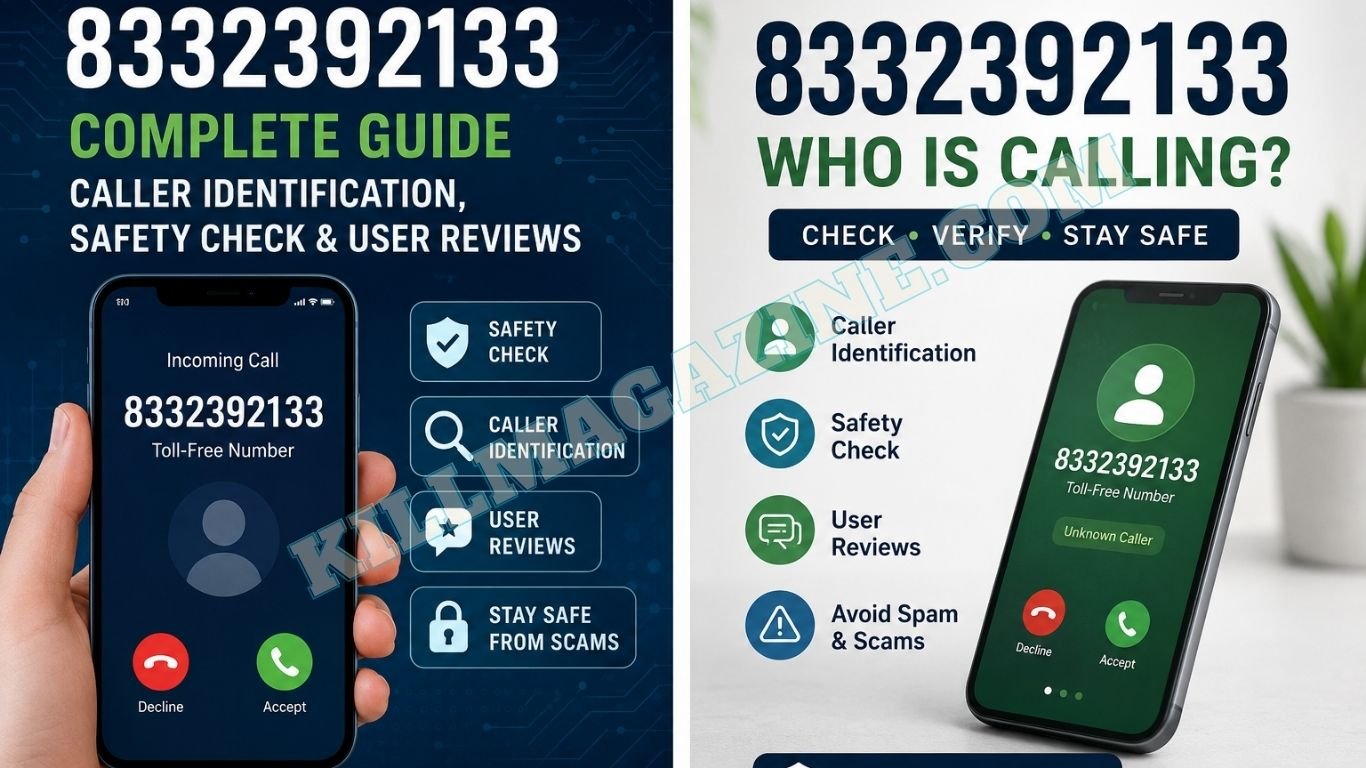
In today’s digital world, receiving calls from unknown numbers has become a common experience. One phone number that has attracted attention from many users is 8332392133. People often search for this number after receiving missed calls, automated messages, or repeated contact attempts. Since phone scams and robocalls continue to increase globally, it is natural for individuals to investigate unfamiliar numbers before answering or calling back.
The number 8332392133 appears to use the 833 toll-free prefix, which is commonly associated with businesses, customer support centers, and service providers. However, the existence of a toll-free prefix does not automatically confirm the legitimacy of the caller. Scammers sometimes use caller ID spoofing techniques to imitate trusted organizations and increase the likelihood that people will answer their calls.
As concerns about privacy, fraud, and identity theft continue to grow, verifying unknown numbers has become an essential safety practice. Before sharing personal information or engaging with an unexpected caller, consumers should understand who may be behind the call and whether any risks are involved.
This comprehensive guide explores everything you need to know about 8332392133, including caller identification methods, safety checks, user experiences, scam prevention strategies, and best practices for handling unknown calls in 2026.
Understanding the Number 8332392133
Is 8332392133 a Toll-Free Number?
Yes, 8332392133 belongs to the 833 toll-free number range. Toll-free numbers are commonly used by businesses, customer service departments, support centers, healthcare providers, financial institutions, and various organizations that want customers to contact them without incurring long-distance charges.
The Federal Communications Commission (FCC) introduced the 833 prefix as part of the growing family of toll-free area codes. Similar to 800, 888, 877, 866, 855, and 844 numbers, calls made to an 833 number generally do not result in charges for the caller.
Many legitimate companies use toll-free numbers because they create a professional appearance and provide a convenient communication channel for customers. However, the toll-free nature of a number does not guarantee that every call is trustworthy. Fraudsters may use technology that disguises their true identity behind a toll-free number.
When evaluating calls from 8332392133, users should avoid assuming legitimacy based solely on the prefix. Instead, additional verification methods should be used to determine whether the caller represents a genuine organization or an unauthorized third party.
Number Structure and Area Code Explanation
Understanding the structure of a phone number can help users identify its purpose and origin. The number 8332392133 can be divided into three parts:
- 833 – Toll-free prefix
- 239 – Exchange code
- 2133 – Subscriber number
Unlike geographic area codes, toll-free prefixes are not tied to a specific city or state. This means the caller could be operating from virtually anywhere while using the same toll-free number.
The introduction of the 833 prefix was necessary because demand for toll-free numbers increased dramatically as businesses expanded customer support services. Companies now use multiple toll-free prefixes to maintain nationwide communication networks.
Because toll-free numbers are portable, ownership may change over time. A number that belonged to one organization several years ago could be reassigned to another business later. This is why current verification is important when researching any unfamiliar phone number.
Users searching for 8332392133 should remember that the prefix alone does not reveal the caller’s identity. Additional research and verification are required to determine who is currently using the number.
Possible Business or Customer Service Connection
Many searches related to 8332392133 occur because recipients suspect the call may be linked to a business, customer service department, financial institution, insurance provider, healthcare service, or online platform.
Legitimate organizations often use toll-free numbers for purposes such as:
- Appointment reminders
- Account verification
- Customer support
- Payment notifications
- Service updates
- Delivery confirmations
- Membership renewals
In some cases, customers may receive calls after submitting online forms, requesting quotes, creating accounts, or interacting with a company’s support system.
However, users should remain cautious because scammers frequently impersonate banks, government agencies, technology companies, and customer support representatives. They may claim urgent account issues or security concerns to pressure victims into providing sensitive information.
Whenever a call appears to come from a customer service department, it is safer to independently verify the organization by contacting the company through its official website or published phone number rather than relying solely on information provided during the call.
Why Did 8332392133 Call Me?
Common Reasons for Receiving Calls from Unknown Numbers
There are numerous reasons why someone might receive a call from 8332392133. Some calls are entirely legitimate, while others may be marketing-related or potentially fraudulent.
Common reasons include:
- Customer support follow-ups
- Verification requests
- Appointment reminders
- Debt collection notices
- Delivery updates
- Service renewals
- Survey invitations
- Promotional campaigns
Businesses increasingly rely on automated systems to contact customers efficiently. As a result, consumers may receive calls without immediately recognizing the organization behind them.
The challenge is distinguishing between legitimate communication and unwanted solicitation. This is why researching unfamiliar numbers before engaging with them has become a standard consumer safety practice.
Customer Service and Verification Calls
One possibility is that 8332392133 is being used for customer service or account verification purposes. Many organizations contact customers to confirm transactions, verify identities, reset passwords, or provide account-related notifications.
Examples include:
- Banking verification calls
- Online account security checks
- Insurance claim updates
- Healthcare appointment confirmations
- Subscription service notifications
These calls often involve automated systems that ask users to confirm information or press specific keypad options.
While verification calls can be legitimate, users should never provide sensitive information such as passwords, PINs, social security numbers, banking credentials, or one-time security codes unless they have independently verified the caller’s authenticity.
Marketing and Promotional Calls
Marketing campaigns represent another common reason behind calls from toll-free numbers.
Businesses frequently use outbound calling systems to:
- Promote products
- Offer discounts
- Conduct market research
- Generate sales leads
- Announce special promotions
- Encourage service upgrades
While some consumers appreciate promotional offers, others consider such calls intrusive. If 8332392133 is associated with marketing activity, repeated contact attempts may occur.
Many countries provide consumer protection regulations that allow individuals to opt out of telemarketing communications. Users who no longer wish to receive marketing calls can often request removal from the caller’s contact database.
Automated or Robocall Possibilities
Robocalls have become one of the most common forms of telephone communication. These automated systems can place thousands of calls within minutes using prerecorded messages or artificial intelligence technology.
Legitimate robocalls may include:
- School announcements
- Healthcare reminders
- Flight updates
- Utility notifications
However, fraudulent robocalls often attempt to create urgency by claiming:
- Account suspension
- Tax problems
- Prize winnings
- Security breaches
- Debt collection threats
If the call from 8332392133 contains prerecorded messages, aggressive demands, or requests for sensitive information, caution is strongly recommended.
Is 8332392133 Legitimate or a Scam?
How to Identify Scam Calls
Determining whether a call is legitimate requires careful evaluation. Scammers use sophisticated tactics designed to exploit trust and create panic.
Signs of a scam call include:
- Requests for immediate payment
- Threats of legal action
- Demands for gift card purchases
- Pressure to act quickly
- Requests for banking information
- Requests for passwords or verification codes
Legitimate organizations rarely demand urgent payment over the phone without providing alternative verification methods.
Consumers should remain skeptical whenever callers attempt to create fear or urgency.
Warning Signs to Watch For
Several warning signs can help identify suspicious activity:
- Caller refuses to identify themselves
- Poor call quality or automated scripts
- Unexpected financial requests
- Pressure tactics
- Requests for remote computer access
- Threatening language
These indicators often suggest the call may not be trustworthy.
When multiple warning signs appear during the same conversation, ending the call immediately is usually the safest response.
Caller ID Spoofing Explained
Caller ID spoofing occurs when scammers manipulate phone systems to display a misleading number.
This means that even if 8332392133 appears on the screen, the actual caller could be located elsewhere and operating under a completely different identity.
Spoofing makes it difficult for consumers to determine who is truly calling. Fraudsters frequently imitate:
- Government agencies
- Banks
- Healthcare providers
- Technology companies
- Customer support centers
Because spoofing technology has become increasingly accessible, users should never trust caller ID alone when evaluating a phone call.
Security Risks Associated with Unknown Calls
Unknown calls can expose users to several security risks, including:
- Identity theft
- Financial fraud
- Account compromise
- Data collection scams
- Social engineering attacks
Even simple conversations can provide scammers with valuable information. Confirming your name, address, or account details may contribute to future fraud attempts.
The safest approach is to verify callers independently before sharing any personal or financial information.
Reports and User Experiences About 8332392133
Common Complaints Reported Online
When users receive calls from an unfamiliar number such as 8332392133, many immediately turn to online phone-number reporting platforms to see whether others have experienced similar contact attempts. User reports can provide valuable clues about the nature of a caller, although it is important to remember that individual experiences may vary.
Common complaints associated with unknown toll-free numbers often include repeated calls without voicemail messages, unexpected contact from organizations the recipient does not recognize, and automated messages requesting action. Some users report receiving multiple calls throughout the week, leading them to suspect telemarketing activity or robocalls.
Another frequent complaint involves calls that disconnect shortly after being answered. This practice is sometimes associated with automated dialing systems attempting to verify whether a phone number is active. Once a number is confirmed as active, additional calls may follow in the future.
Consumers also report concerns when callers request personal information without adequately identifying themselves. Requests for account details, payment information, passwords, or verification codes are typically viewed as red flags.
While online reports can help identify patterns, users should avoid drawing conclusions from a single review. The best approach is to compare multiple sources, evaluate recurring themes, and combine user feedback with independent verification methods.
Positive User Experiences
Not every call from a toll-free number is problematic. Many organizations legitimately use toll-free numbers to communicate with customers. Positive reports often involve appointment reminders, service updates, account notifications, customer support follow-ups, and verification calls.
For example, a customer who recently contacted a company’s support team may receive a callback from a toll-free number regarding an open service request. Similarly, healthcare providers may use automated systems to confirm appointments or provide prescription notifications.
Some users report that calls from unfamiliar toll-free numbers turned out to be important notifications related to deliveries, banking alerts, insurance updates, or subscription services.
Because businesses increasingly rely on centralized communication systems, customers may not recognize the number even when the call itself is legitimate. This is why evaluating the context of recent interactions is important. If you recently signed up for a service, requested support, or completed a transaction, there is a greater possibility that the call may be connected to that activity.
Positive experiences highlight the importance of verification rather than automatically assuming every unknown number is a scam.
Missed Calls and Voicemail Reports
Missed calls often generate significant curiosity among recipients. When 8332392133 appears as a missed call, many users search online to determine whether returning the call is necessary.
Voicemail messages can provide valuable information about the caller’s identity and intentions. Legitimate organizations generally leave professional messages that include:
- Company name
- Reason for contact
- Callback instructions
- Customer support information
Suspicious voicemail messages may contain urgent language, threats, or vague requests for immediate action. Examples include warnings about account suspension, legal action, unpaid balances, or security issues requiring urgent attention.
Users should carefully analyze voicemail content before responding. If the message claims to represent a known organization, it is safer to contact that organization directly using contact information published on its official website rather than returning the call to the number provided in the voicemail.
Community Feedback and Discussions
Online communities play a major role in helping consumers identify suspicious phone numbers. Discussion forums, social media groups, and caller-reporting websites allow users to share experiences and compare observations.
Community discussions often reveal recurring patterns such as:
- Frequent calling schedules
- Robocall behavior
- Marketing campaigns
- Verification attempts
- Customer support callbacks
When multiple individuals report similar experiences, users gain a clearer picture of the number’s potential purpose.
However, community feedback should be treated as informational rather than definitive evidence. Phone numbers can change ownership, businesses can update communication practices, and caller ID spoofing can create misleading reports.
Combining community feedback with independent verification remains the most reliable approach.
How to Verify the Caller Behind 8332392133
Reverse Phone Lookup Methods
One of the most effective ways to investigate an unfamiliar number is through reverse phone lookup services. These tools allow users to enter a phone number and search for publicly available information associated with it.
Reverse lookup platforms may provide details such as:
- Business name
- Caller category
- Location information
- User reviews
- Spam reports
- Historical records
While results vary depending on the service used, reverse lookup searches often provide valuable clues regarding whether the caller is a business, telemarketer, or potentially suspicious entity.
Users should compare information from multiple sources whenever possible to improve accuracy.
Using Caller Identification Services
Caller identification applications have become increasingly popular due to the rise in spam and robocalls. Modern caller ID services use large databases to identify incoming numbers before users answer the call.
Features commonly include:
- Real-time caller identification
- Spam detection
- Fraud alerts
- Community reporting
- Automatic call blocking
These tools help users make informed decisions about whether to answer, ignore, or block incoming calls.
Although caller ID services are useful, they should not be viewed as perfect solutions because scammers continuously change tactics and phone numbers.
Checking Online Phone Directories
Online phone directories remain another useful verification resource. Some directories allow users to search toll-free numbers and determine whether they are publicly associated with a company or organization.
When reviewing directory information, users should look for:
- Verified business listings
- Official contact details
- Company websites
- Customer service information
Matching information across multiple trusted sources can increase confidence in the caller’s legitimacy.
Reporting Suspicious Activity
If you believe a call from 8332392133 is fraudulent or suspicious, reporting the activity helps protect other consumers.
Reports may be submitted to:
- Consumer protection agencies
- Telecommunications regulators
- Carrier spam reporting systems
- Online caller-reporting communities
Reporting suspicious numbers contributes to broader fraud prevention efforts and helps improve spam-detection databases used by phone providers and caller-identification services.
What Should You Do If 8332392133 Calls You?
When to Answer the Call
Answering the call may be appropriate if:
- You are expecting a callback.
- You recently contacted customer support.
- You have pending appointments.
- You are awaiting service updates.
Even when answering, maintain caution and avoid providing personal information until the caller’s identity has been verified.
Ask questions that confirm the organization’s legitimacy and independently verify claims whenever possible.
When to Ignore or Block the Number
Ignoring the call may be the best option if:
- The caller repeatedly contacts you without explanation.
- No voicemail is left.
- The call appears suspicious.
- You have no known connection to the caller.
Repeated unwanted calls may justify blocking the number entirely.
Most smartphones now provide built-in blocking features that allow users to prevent future contact from specific numbers.
How to Protect Personal Information
Protecting personal information should always be the top priority when interacting with unknown callers.
Never share:
- Passwords
- Banking credentials
- Verification codes
- Credit card numbers
- Social security information
- Personal identification numbers
Legitimate organizations rarely request sensitive information through unsolicited phone calls.
If a caller asks for confidential details, independently verify the organization’s identity before proceeding.
Best Practices for Phone Security
Good phone security habits include:
- Using spam filters
- Keeping software updated
- Reviewing caller information carefully
- Monitoring financial accounts
- Enabling multi-factor authentication
These practices reduce the risk of fraud and improve overall digital security.
How to Block 8332392133 on Different Devices
Blocking on Android Phones
Android users can typically block numbers by:
- Opening the Phone app.
- Viewing recent calls.
- Selecting the number.
- Choosing “Block” or “Report Spam.”
The exact process may vary depending on the device manufacturer.
Blocking on iPhone Devices
iPhone users can block numbers by:
- Opening the Phone application.
- Selecting Recent Calls.
- Tapping the information icon.
- Choosing “Block this Caller.”
Blocked callers will no longer be able to contact the device through calls, messages, or FaceTime.
Carrier-Based Blocking Options
Many mobile carriers provide additional spam protection services.
Features may include:
- Spam call detection
- Fraud alerts
- Automatic blocking
- Caller verification
Carrier-level protection often complements device-based blocking tools.
Third-Party Call Blocking Apps
Numerous third-party applications offer advanced call management features.
These apps may provide:
- Community-generated spam databases
- Real-time fraud detection
- Automatic filtering
- Caller reputation scoring
Combining multiple layers of protection can significantly reduce unwanted calls.
Understanding Toll-Free Numbers Like 8332392133
What Does the 833 Prefix Mean?
The 833 prefix is part of the North American toll-free numbering system. It functions similarly to 800, 888, 877, 866, 855, and 844 prefixes.
Toll-free numbers allow customers to contact organizations without paying long-distance charges.
Difference Between 800, 833, 844, and 888 Numbers
The primary difference is availability rather than functionality.
All of these prefixes serve the same purpose:
- 800
- 833
- 844
- 855
- 866
- 877
- 888
Businesses choose whichever numbers are available when registering their toll-free services.
How Businesses Use Toll-Free Numbers
Businesses use toll-free numbers for:
- Customer support
- Sales inquiries
- Technical assistance
- Appointment scheduling
- Billing support
- Service requests
Toll-free communication improves accessibility and customer satisfaction.
Conclusion
The phone number 8332392133 uses an 833 toll-free prefix, which may indicate a connection to customer service operations, business communications, automated systems, or marketing campaigns. However, the presence of a toll-free number alone does not guarantee legitimacy.
Before interacting with any unknown caller, users should verify the caller’s identity through reverse phone lookup tools, caller identification services, official company contact channels, and community feedback platforms. Awareness remains the strongest defense against fraud, identity theft, and telephone scams.
As phone scams continue to evolve in 2026, consumers must remain cautious, protect personal information, and verify unexpected communications independently. Whether the call is legitimate or unwanted, taking a few moments to investigate the number can prevent significant security and privacy risks.
By following the verification and safety practices outlined in this guide, users can make informed decisions when dealing with calls from 8332392133 and other unfamiliar phone numbers.