Introduction to Transds
The digital world is evolving faster than ever, and with that evolution comes new technologies designed to support massive amounts of data, global connectivity, and intelligent automation. One emerging concept gaining attention among technology experts and digital infrastructure planners is Transds. While the term may still be unfamiliar to many, it represents a powerful shift in how information is transmitted, processed, and distributed across modern networks.
Transds refers to a framework that combines advanced data transmission with distributed computing systems. Instead of relying on a single centralized server to manage operations, Transds distributes computing tasks across multiple interconnected nodes. This approach improves speed, reliability, and resilience, making it ideal for today’s digital ecosystems where billions of devices interact in real time.
Modern technologies such as cloud computing, artificial intelligence, Internet of Things (IoT), and smart cities depend on efficient data flow. Traditional systems often struggle with increasing workloads, causing delays or system failures when a central server becomes overloaded. Transds addresses these challenges by decentralizing processes and enabling systems to operate collaboratively across multiple devices and servers.
As digital transformation accelerates worldwide, frameworks like Transds are becoming essential for building faster, smarter, and more scalable digital environments. From autonomous vehicles to global payment networks, the ability to process and distribute data instantly is shaping the future of connectivity. In many ways, Transds may become the invisible backbone of tomorrow’s digital infrastructure.
What Is Transds?
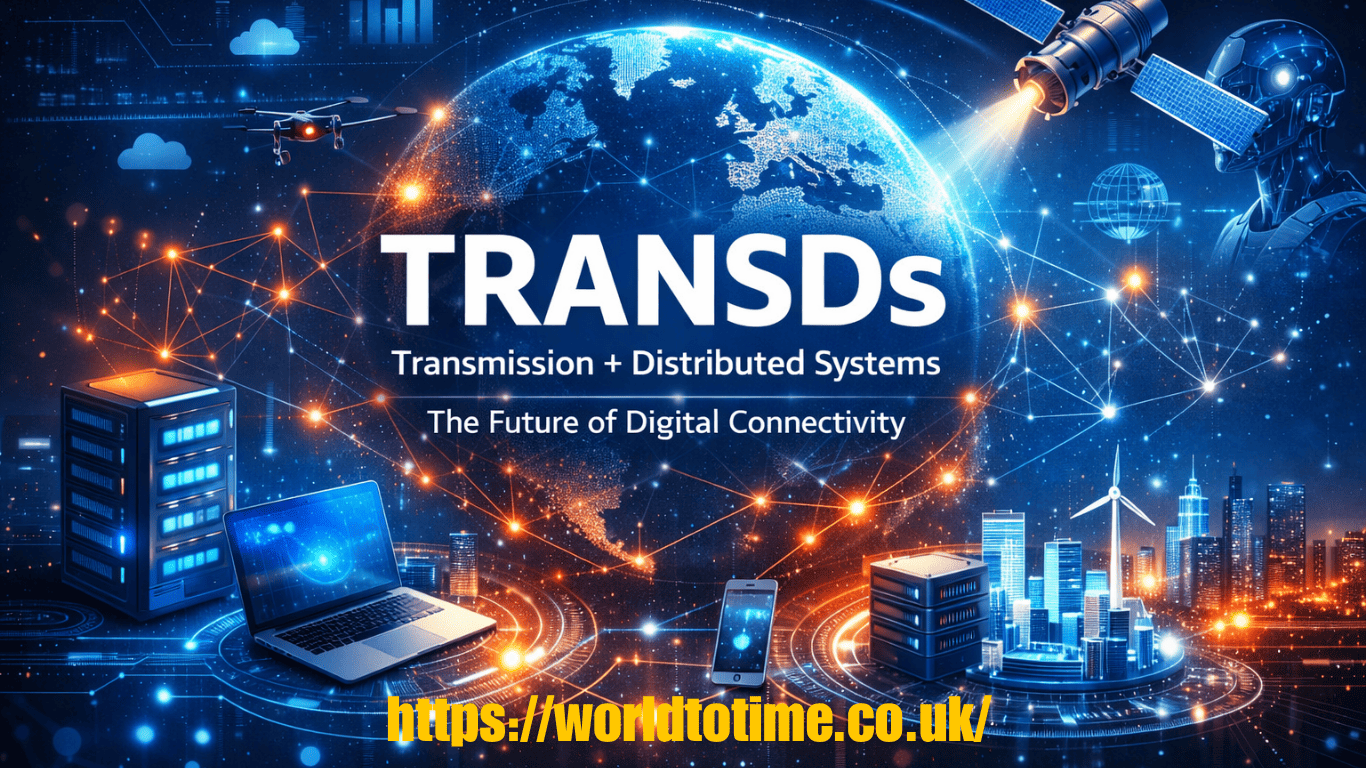
At its core, Transds stands for Transmission + Distributed Systems, a concept that combines data transfer technologies with decentralized computing architecture. It represents a modern approach to managing large volumes of digital information by distributing tasks across multiple systems rather than relying on a single centralized server.
Traditional computing systems operate through a centralized model where one main server processes and controls data flow. While this structure works well for small-scale applications, it becomes inefficient when handling massive global traffic. If the central server fails or becomes overloaded, the entire system can stop functioning. Transds solves this problem by distributing workloads across several interconnected nodes, ensuring continuous operation even if one component fails.
The core idea behind Transds is collaboration between multiple computing nodes. Each node can store, process, and transmit data independently while remaining synchronized with the network. This design allows the system to scale easily as demand increases and ensures faster data processing.
A simple way to understand Transds is through an analogy. Imagine a city powered by a single large power station. If that station fails, the entire city loses electricity. Now imagine a city powered by thousands of solar panels on rooftops. Even if some panels stop working, the rest continue supplying power. Transds works in a similar way for digital systems.
Key Characteristics of Transds
Distributed Architecture
Transds uses multiple interconnected nodes instead of a single server. This architecture improves system resilience and reduces the risk of downtime.
Real-Time Communication
Nodes communicate continuously, enabling systems to update and synchronize data almost instantly.
High Reliability and Scalability
Because workloads are distributed, systems can easily add new nodes to support growth.
Secure Multi-Node Infrastructure
Data is often encrypted and distributed across nodes, making it harder for cyber attackers to compromise the system.
The Evolution of Data and the Rise of Transds
To fully understand the importance of Transds, it helps to look at how digital infrastructure has evolved over the past three decades.
Early Internet Era (1990s)
During the early days of the internet, connectivity was limited and slow. Most users accessed the web through dial-up connections, which transmitted data at very low speeds. Websites were simple, and online applications were minimal. At this stage, centralized systems were sufficient because data demands were relatively small.
Broadband and Mobile Expansion (2000s)
The 2000s brought widespread broadband internet and the rapid growth of mobile devices. Faster connections allowed people to share photos, videos, and large files online. Businesses began moving services to the internet, leading to the growth of e-commerce, digital communication platforms, and online entertainment.
Cloud and Big Data Revolution (2010s)
In the 2010s, companies like Amazon, Google, and Microsoft built massive cloud computing infrastructures. These centralized data centers allowed businesses to store huge amounts of data and run applications remotely. However, as data traffic exploded, centralized systems began facing bottlenecks and performance limitations.
Distributed Computing Era (2020s and Beyond)
Today, the digital world is entering a new phase where billions of devices—from smartphones to smart home sensors—generate continuous streams of data. Technologies like edge computing, IoT, and AI-powered analytics require faster and more distributed processing.
This environment created the perfect conditions for frameworks like Transds to emerge. By combining distributed computing with advanced transmission systems, Transds enables networks to process information locally while remaining connected globally.
How Transds Works
Transds operates through a sophisticated architecture designed to handle data efficiently across multiple interconnected systems. Instead of processing information in a single location, the system distributes tasks across nodes that work together in real time.
Core Components
Data Transmission Channels
These channels allow information to travel across networks using technologies such as fiber-optic cables, wireless connections, and satellite communications.
Distributed Nodes
Nodes are independent computing units—servers, devices, or cloud systems—that store and process data. Each node contributes to the overall functionality of the network.
Real-Time Synchronization Systems
Synchronization ensures that every node has accurate and up-to-date information. When data changes in one location, updates are quickly shared across the network.
Key Processes
Data Transmission
Information is transmitted through multiple digital pathways simultaneously, improving speed and reducing congestion.
Distributed Processing
Instead of one central server handling all tasks, nodes divide the workload and process information in parallel.
Node Synchronization
Continuous communication between nodes ensures consistency across the entire system.
Technical Advantages
Reduced Latency
Because data can be processed closer to its source, response times are significantly faster.
Self-Healing Architecture
If one node fails, others automatically take over its responsibilities.
Continuous Uptime
Distributed networks minimize downtime, ensuring services remain available even during technical issues.
Why Transds Matters More Than Ever
As digital systems become more complex, the need for reliable and efficient data infrastructure has never been greater. Transds addresses many of the challenges faced by traditional computing models.
Faster Data Processing
Speed is critical in modern technology. Applications like online gaming, financial trading, and autonomous vehicles require instant responses. By distributing workloads across nodes, Transds reduces delays and allows systems to process data almost instantly.
Improved System Reliability
Centralized systems often have a single point of failure. If that server stops working, the entire service becomes unavailable. Transds eliminates this risk by distributing operations across multiple nodes that can support each other.
Enhanced Cybersecurity
Decentralized architectures make cyberattacks more difficult. Instead of targeting one central database, attackers must compromise multiple nodes simultaneously. Additionally, distributed encryption techniques further strengthen security.
Seamless Scalability
Businesses constantly face growing data demands. Transds allows organizations to expand their infrastructure simply by adding new nodes, avoiding expensive system overhauls.
Real-World Applications of Transds
Although the concept may seem technical, Transds already influences many real-world industries.
Healthcare
Hospitals rely on fast data sharing to coordinate patient care. Distributed systems enable doctors to access medical records, imaging scans, and diagnostic results in real time, even when they are located in different countries.
Smart Cities
Urban infrastructure increasingly depends on interconnected sensors and devices. Traffic signals, pollution monitors, and energy grids exchange data continuously to improve city efficiency.
Finance
Global financial systems require secure and instantaneous transactions. Distributed architectures support payment processing, fraud detection, and blockchain technologies.
E-Commerce
Online retailers handle millions of transactions every minute. Distributed processing allows platforms to manage orders, payments, and inventory updates without delays.
Artificial Intelligence
AI models require enormous computing power and data storage. Distributed computing frameworks allow multiple machines to train models simultaneously, accelerating innovation.
Transds and the Future of Artificial Intelligence
Artificial intelligence relies heavily on data availability and processing power. Transds provides the infrastructure necessary to support AI’s growing demands.
AI Model Training
Large AI models require vast datasets and powerful computing systems. Distributed architectures allow multiple machines to work together, reducing training time.
Real-Time AI Decisions
Applications such as self-driving cars and smart assistants rely on immediate data analysis. Transds ensures rapid communication between devices and servers.
Predictive Analytics
Businesses use AI to analyze consumer behavior, predict trends, and improve decision-making. Distributed systems enable these analyses to occur in real time.
Challenges Ahead
Despite its advantages, Transds faces several obstacles.
Infrastructure Costs
Building distributed networks requires significant investment in hardware, software, and maintenance.
Data Privacy and Compliance
Data moving across international borders must comply with regulations such as GDPR and other privacy laws.
Legacy System Integration
Many organizations still rely on outdated systems that are not compatible with distributed architectures.
Expert Opinions on Transds
Technology leaders believe distributed frameworks will become the foundation of future digital systems. Experts in cloud computing and AI highlight the resilience and scalability of distributed architectures.
Many engineers predict that most global platforms will adopt distributed models within the next decade to remain competitive.
How Transds Drives Efficiency and Cost Savings
Organizations adopting distributed frameworks often see significant efficiency improvements.
Operational Advantages
- Lower infrastructure costs
- Higher uptime
- Faster data processing
Enterprise Benefits
- Improved performance
- Reduced operational risks
- Increased scalability
These advantages make distributed systems attractive for businesses handling massive data volumes.
Industries Being Transformed by Transds
Several sectors are already benefiting from distributed computing principles.
Cloud Computing – Decentralized cloud infrastructures reduce latency and improve reliability.
Financial Technology – Secure and instant digital transactions become possible.
Manufacturing – Smart factories use distributed sensors and analytics.
Entertainment & Media – Streaming platforms rely on distributed content delivery networks.
Healthcare – Faster and safer patient data exchange improves medical care.
Businesses and Startups Leading the Transds Revolution
Major technology companies are already implementing distributed systems.
Examples include:
- Amazon Web Services (AWS)
- Google Cloud
- IBM Cloud Satellite
- Databricks
- Tesla
Startups are also building tools focused on edge computing, distributed AI infrastructure, and real-time data streaming.
The Economic Ripple Effect
The rise of distributed technologies is creating new economic opportunities.
Market Growth
The global digital infrastructure market continues expanding rapidly.
Job Creation
New roles include distributed system engineers, cloud architects, and data infrastructure specialists.
Global Innovation
Startups can scale faster by leveraging distributed computing platforms.
Predictions: The Future of Transds (2030–2035)
Experts expect distributed computing frameworks to become the foundation of digital infrastructure.
Expected Trends
- Widespread adoption among Fortune 500 companies
- Smart city expansion
- Integration with AI, IoT, and 6G networks
Future Possibilities
- Quantum computing integration
- Global real-time communication networks
Challenges on the Road Ahead
Even as Transds evolves, challenges remain.
Data Sovereignty
Countries may enforce strict rules on where data is stored.
Energy Consumption
Distributed networks require significant energy resources.
Standardization Issues
Global protocols are needed to ensure interoperability.
Security Threats
Each node must be protected against cyber threats.
Final Thoughts
Transds represents a significant step forward in the evolution of digital infrastructure. By combining advanced data transmission with distributed computing, it creates networks that are faster, more reliable, and more scalable than traditional systems.
As artificial intelligence, IoT, and smart cities continue to expand, the demand for distributed frameworks will grow. Businesses that adopt technologies like Transds early will gain a competitive advantage in the data-driven economy.
FAQs About Transds
What does Transds stand for?
It stands for Transmission + Distributed Systems.
Is Transds an actual technology?
It represents a conceptual framework based on modern distributed computing principles.
Why is Transds important for AI and IoT?
Because these technologies require fast, real-time data processing across large networks.
Is Transds secure?
Yes. Distributed architectures improve resilience and security compared to centralized systems.
Will Transds replace cloud computing?
No. It will enhance cloud systems by enabling distributed processing and faster data exchange.