Introduction
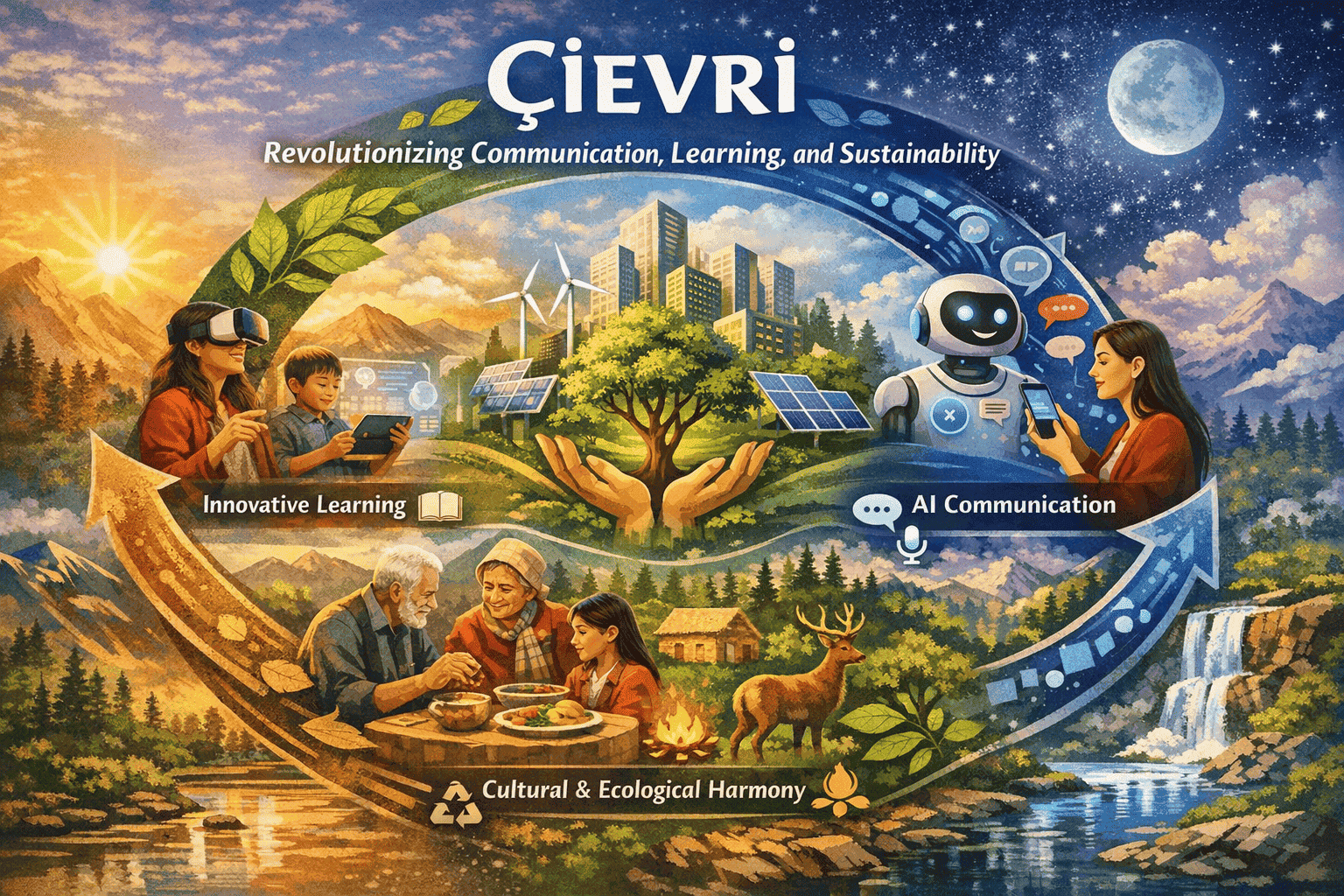
Çievri is a transformative concept that blends ancient traditions with modern innovation, offering a new perspective on how humans communicate, learn, and live sustainably. Originally rooted in Turkic ceremonial practices, the term Çievri referred to cycles, rotation, and shared community experiences, often tied to rituals and seasonal events. Today, it has evolved into a multidimensional philosophy that bridges cultural heritage, technological advancement, and environmental stewardship.
In 2026, Çievri is more relevant than ever. Modern life often feels disconnected from natural rhythms and cultural roots, with technology advancing faster than our understanding of its impact on society and the environment. Çievri provides a framework that reconnects us with these cycles, emphasizing intentional living, sustainable education, and emotionally intelligent communication. From AI-driven learning platforms to eco-conscious urban planning, the philosophy of Çievri encourages society to operate in harmony with nature, culture, and technological systems. By understanding and applying Çievri, individuals and organizations can foster balanced progress that respects both tradition and innovation, paving the way for a sustainable and inclusive future.
What Is Çievri?
Definition (Featured Snippet Optimized)
Çievri is a holistic concept that represents cycles, balance, and renewal across multiple dimensions of life. More than just a word, it serves as a lens to view how humans interact with knowledge, technology, and the environment. In education, Çievri encourages iterative learning cycles where learners engage, reflect, apply, and revisit knowledge continuously. Communication, it drives emotionally intelligent and context-aware digital interactions. In sustainability, it underlines natural cycles, resource reuse, and eco-conscious planning.
Unlike conventional definitions that narrow a concept to a single domain, Çievri integrates ancient wisdom and modern innovation. It reminds us that learning, technology, and human behavior are most effective when aligned with cycles—whether seasonal, educational, or social. By recognizing patterns and respecting continuity, Çie vri enables us to design systems, workflows, and communities that are adaptable, resilient, and harmonious with human and natural rhythms. Its multidimensional application makes Çievri a critical framework for future-ready individuals, organizations, and societies striving for balance and sustainability.
Etymological and Cultural Origins
The word Çievri originates from Turkic roots, closely linked to the term “çevrim,” meaning cycle or rotation. Historically, it denoted ceremonial acts, seasonal celebrations, and communal gatherings, symbolizing unity, shared responsibility, and respect for natural patterns. For instance, in Ottoman and Turkic societies, circular pastries or breads were shared during ceremonies, emphasizing community and cyclical life.
Çievri also resonates with indigenous concepts where harmony between humans, ancestors, and nature defines daily living. From rituals marking harvests to oral storytelling traditions, the idea reinforces interconnectedness. Modern interpretations retain this foundational meaning but expand it to incorporate technology, sustainability, and education. By connecting ancient practices with contemporary innovation, Çievri highlights how cycles govern human behavior, environmental processes, and societal continuity, reminding us that respecting tradition can guide future growth.
Çievri as a Modern Educational Innovation
Interactive Learning Modules
Çievri revolutionizes education through interactive learning modules designed for diverse learners. Unlike traditional rote-based teaching, these modules encourage experiential learning, engagement, and reflection. Students are not passive recipients but active participants, interacting with simulations, exercises, and quizzes tailored to their needs.
Whether learning a new language, exploring scientific concepts, or acquiring professional skills, Çievri modules cater to all levels. They consider age, proficiency, and learning style, ensuring accessibility and inclusion. This dynamic approach mirrors real-life learning cycles—exploring, applying, and reviewing knowledge repeatedly. By adopting interactive modules, educational institutions and learners can foster curiosity, critical thinking, and practical understanding, preparing students for real-world challenges rather than just exams.
Multimedia Integration
Modern Çievri platforms integrate multimedia elements to enhance engagement and comprehension. Videos, interactive simulations, and gamified quizzes create a multisensory learning environment. Visual learners benefit from animations and diagrams, auditory learners from audio lectures, and kinesthetic learners from interactive simulations.
For example, a history student might explore an animated map of ancient trade routes, while a medical student practices virtual surgeries in a risk-free environment. Multimedia integration ensures learning is immersive, intuitive, and adaptable. This approach increases retention, supports diverse learning needs, and makes education both inclusive and enjoyable.
Real-Time Feedback & Adaptive Assessments
A key principle of Çievri education is real-time feedback. Traditional exams measure understanding after the fact, but adaptive assessments continuously monitor progress, allowing learners to adjust their strategies instantly. AI-driven systems detect areas of struggle and provide tailored resources, examples, or exercises, ensuring comprehension before moving forward.
This responsive approach helps learners internalize concepts more effectively, reduces frustration, and boosts confidence. Real-time feedback is particularly valuable in professional development, where skill mastery is critical. Çievri-based education transforms learning into a cycle of practice, reflection, and adaptation, making knowledge acquisition continuous, personalized, and effective.
Personalized Learning for All Ages
One of the strongest aspects of Çievri education is its ability to personalize learning across ages and skill levels. A 10-year-old exploring geometry and a 45-year-old learning leadership can both benefit from tailored content that fits their pace, preferences, and background knowledge.
Personalized learning fosters engagement and equity. By addressing individual strengths and weaknesses, it allows each learner to progress naturally. This approach also reduces barriers such as language limitations or prior academic gaps, ensuring that education is accessible, empowering, and meaningful for all participants.
Practical Simulations for Real-World Application
Beyond theoretical knowledge, Çie vri emphasizes practical skills through immersive simulations. Medical students, engineers, and language learners can practice real-world scenarios safely and repeatedly. These simulations build competence, confidence, and decision-making skills.
By bridging the gap between theory and practice, Çievri prepares learners for professional challenges and enhances employability. This experiential learning cycle mirrors the principle of continuous growth inherent in the Çievri philosophy.
Çievri and AI-Driven Communication Systems
AI at the Heart of Interaction
Çievri redefines communication by embedding AI in everyday interactions. These systems do not replace human connection but enhance it, ensuring clarity, empathy, and efficiency. AI tools optimize workflows, reduce repetitive tasks, and provide context-aware assistance, making digital communication seamless and intuitive.
Contextual Smart Replies
Smart reply features use machine learning to generate messages that consider context, tone, and prior conversation history. In professional settings, this reduces time spent on routine responses. In personal contexts, it supports more meaningful and emotionally sensitive interactions.
Voice Command and Accessibility
Voice-activated communication tools expand accessibility. Users can dictate messages, navigate apps, and control systems without relying on keyboards. This functionality is especially beneficial for people with disabilities, hands-busy environments, or remote interactions, promoting inclusivity in digital spaces.
Mood Detection and Emotional Intelligence
AI systems in Çievri platforms can detect user emotions through sentiment and voice analysis. By recognizing stress, excitement, or frustration, technology can adapt responses to support well-being, creating more human-centered interactions.
Tailored and Predictive Messaging
Çievri leverages predictive analytics to anticipate user needs, suggest actions, and optimize communication flow. From scheduling reminders to generating content drafts, predictive messaging enhances productivity and user satisfaction, making digital tools proactive partners in daily life.
Çievri as a Symbol of Environmental Cycles and Sustainability
Nature’s Cycles as the Blueprint
Çievri draws inspiration from nature’s cycles—water, carbon, and seasonal processes—to emphasize balance and renewal. Understanding these cycles is essential for sustainable living, as disruption leads to ecological harm.
Sustainability Principles within Çievri
It promotes circular design, efficient resource use, and low-impact lifestyles. By integrating sustainability into everyday practices, Çievri ensures that human activity harmonizes with natural systems.
Renewable Energy Integration
Solar, wind, and hydro power systems embody the cyclical thinking of Çie vri. These renewable sources operate within natural cycles, reducing reliance on finite resources and minimizing environmental disruption.
Green Urban Planning and Architecture
Urban design inspired by Çievri emphasizes green spaces, renewable energy, and waste recycling. Cities like Copenhagen and Singapore showcase how cyclical urban planning enhances resilience, sustainability, and well-being.
Cultural Dimensions of Çievri
Rituals, Food, and Community Gatherings
Çievri manifests in cultural rituals and ceremonial foods, symbolizing unity and cyclical life. Communal practices, from harvest festivals to traditional cooking, reinforce social cohesion and intergenerational connection.
Intergenerational Wisdom and Tradition
Knowledge transfer, storytelling, and mentorship embody Çievri’s philosophy. Passing traditions ensures cultural continuity and fosters respect for heritage.
Festivals and Communal Life
Celebrations aligned with seasons or life events highlight the importance of cycles. Participating in these traditions nurtures community identity and ecological awareness.
Çievri in Modern Technology and Platforms
Technological Adaptation of Cyclical Systems
Education, health, and wellness apps increasingly reflect cyclical thinking. Daily reflections, iterative learning, and feedback loops integrate Çievri principles into technology.
AI + Tradition: A New Harmony
AI preserves cultural heritage through language archiving, interactive databases, and adaptive learning platforms that respect traditional methods.
Gamification and Social Learning
Gamified platforms reinforce learning through cycles of challenge, reward, and reflection, encouraging collaboration and iterative improvement.
The Role of Individuals in Supporting Çievri
Daily Actions for Sustainability
Small actions—recycling, conserving water, or reducing energy use—contribute to ecological balance. Repetition and consistency amplify impact.
Cultural Preservation at Home
Speaking native languages, cooking traditional meals, or supporting local artisans maintains cultural continuity.
Embracing Lifelong Learning
Continuous education and skill acquisition reflect Çievri’s cyclical approach, fostering personal growth and adaptability.
Challenges to the Çievri Philosophy
Climate Crisis and Ecosystem Disruption
Climate change disrupts natural cycles, threatening ecosystems and human well-being. Çievri emphasizes urgent, restorative action.
Cultural Erosion in Globalized Societies
Globalization can erode traditions and weaken community cohesion, challenging the transmission of cyclical knowledge.
Technological Inequity
Access to AI, digital tools, and online learning remains uneven, potentially excluding populations from the benefits of Çievri-based systems.
Looking Ahead — The Future of Çievri
Education Systems of Tomorrow
Future education will adopt adaptive, personalized, and cycle-based models, emphasizing reflection and long-term mastery.
A Model for Digital Sustainability
Çievri-inspired technology prioritizes efficiency, energy-conscious design, and mindful digital practices to reduce digital waste.
Building Çievri Cities
Urban planning will align human systems with nature’s cycles, emphasizing renewable energy, green spaces, and resource reuse.
Conclusion
Çievri unites tradition, technology, education, and sustainability into a comprehensive philosophy. By recognizing and respecting cycles in life, learning, and the environment, individuals and societies can achieve balance, resilience, and long-term progress. In a rapidly changing world, Çievri provides a compass for thoughtful action, continuous learning, and conscious innovation.
FAQs About Çievri
- What does Çievri mean?
A multidimensional concept emphasizing cycles, balance, and renewal in education, communication, and sustainability. - Why is Çievri important today?
It aligns human activity with natural cycles, supports sustainable practices, and fosters emotional and cultural intelligence. - How is Çievri applied in modern education?
Through interactive modules, adaptive assessments, personalized learning, and practical simulations. - How does Çievri relate to sustainability?
It mirrors natural cycles, supports renewable energy, circular design, and eco-conscious urban planning. - How can individuals incorporate Çievri in daily life?
By practicing sustainability, preserving cultural traditions, and embracing lifelong learning and conscious communication.