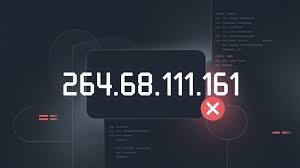
1. Introduction to 264.68.111.161
In today’s digital world, IP addresses act as the backbone of internet communication. Every device connected to the internet—whether a smartphone, computer, server, or IoT device—relies on an IP address to send and receive data. Because of this, many users become curious or concerned when they encounter unfamiliar IP addresses in server logs, email headers, security alerts, or analytics tools. One such frequently searched string is 264.68.111.161, which raises questions about its meaning, validity, and potential risks.
People usually search for a specific IP address when they suspect suspicious activity, receive warning emails, or notice strange traffic patterns on their website or network. The IP 264.68.111.161 draws particular attention because it looks like a standard IPv4 address, yet something about it feels unusual. This uncertainty leads users to ask: What is 264.68.111.161? Is it real? Is it dangerous?
The purpose of this guide is to provide a clear, accurate, and user-friendly explanation of everything related to 264.68.111.161. You will learn its actual meaning, whether it is a valid IP address, why it appears online, and how to protect yourself from IP-based scams. By the end of this article, you will have complete clarity and confidence when encountering similar IP addresses in the future.
2. What Is 264.68.111.161?
At first glance, 264.68.111.161 appears to be a standard IP address formatted in the familiar “four numbers separated by dots” style. This format is commonly known as IPv4 (Internet Protocol version 4), which has been the most widely used IP standard for decades. IPv4 addresses are written as four numerical blocks called octets, each separated by a dot.
Each octet in an IPv4 address represents an 8-bit number, meaning its value must fall within a strict numerical range. This technical rule is essential for determining whether an IP address is real or invalid. While 264.68.111.161 visually resembles a valid IPv4 address, a closer technical inspection is required to determine if it truly qualifies as one.
Many users encounter such IP-like strings in system logs, email headers, firewall alerts, or even scam messages claiming “suspicious login attempts.” In some cases, these IPs are automatically generated by misconfigured software, while in others they are deliberately fabricated to confuse or scare users.
So, what is 264.68.111.161 really? Technically speaking, it is not a real IP address, but rather an invalid IPv4 address example. Understanding why it is invalid requires knowing the exact rules of IPv4 formatting, which we will explore in the next section.
3. Is 264.68.111.161 a Valid IP Address?
To answer this clearly: No, 264.68.111.161 is not a valid IP address.
In IPv4 addressing, each of the four octets must have a value between 0 and 255. This limitation exists because each octet is stored in 8 bits, and the maximum number that can be represented using 8 bits is 255. Any number above 255 automatically makes the entire IP address invalid.
In the case of 264.68.111.161, the very first octet is 264, which exceeds the maximum allowed value. Because of this single violation, the entire address becomes invalid and cannot exist on the real internet.
It is important to understand the difference between:
- Valid IP addresses (e.g., 192.168.1.1, 8.8.8.8)
- Reserved IP addresses (used for private networks or special purposes)
- Invalid IP addresses like 264.68.111.161, which do not comply with IP standards at all
Unlike reserved IPs, invalid IPs are not assigned, tracked, or routed anywhere on the internet. They cannot belong to a company, country, hacker, or server. This technical fact alone eliminates many fears users may have when encountering such an IP.
4. Why Does 264.68.111.161 Appear Online?
Despite being invalid, 264.68.111.161 still appears across the internet in search queries, forum posts, and security-related discussions. There are several logical reasons for this.
One common reason is typographical errors. System administrators or developers may accidentally log or display an incorrect IP due to a coding mistake or data parsing error. Automated tools can also misread corrupted data and display an invalid IP format.
Another frequent cause is spam, phishing, or scam attempts. Cybercriminals often use fake or invalid IP addresses in emails to appear technical and intimidating. Messages like “Unauthorized access detected from IP 264.68.111.161” are designed to create panic and trick users into clicking malicious links.
Additionally, invalid IPs are sometimes used as placeholders in testing environments or documentation examples. Developers may insert fake IP addresses during software testing to avoid exposing real user data.
Lastly, misconfigured servers or broken analytics tools can generate malformed IP addresses. When logs are improperly handled, invalid IPs can show up without any malicious intent.
5. Potential Risks Associated With 264.68.111.161
From a purely technical standpoint, 264.68.111.161 poses no direct risk, because it does not exist on the internet. An invalid IP address cannot connect to your device, track your activity, or launch cyberattacks.
However, indirect risks can still exist. The real danger comes from how such IPs are used, not from the IP itself. Fake IP addresses are commonly included in phishing emails, scam notifications, and fake security alerts. These messages rely on fear-based tactics to manipulate users into clicking harmful links or providing sensitive information.
For example, an email claiming “Your account was accessed from 264.68.111.161” may push users to reset passwords on fake websites. This is a classic social engineering technique.
Because of this, users should never trust alerts or warnings that reference invalid IP addresses, especially when combined with urgent language. Always verify alerts through official dashboards, hosting providers, or security tools instead of reacting emotionally.
6. How to Check or Verify an IP Address
Verifying an IP address is a simple but powerful skill. One manual method is to check each octet and ensure all values fall between 0 and 255. This alone would instantly confirm that 264.68.111.161 is invalid.
Online IP lookup tools and validators can also be used. When you enter an invalid IP, these tools typically return errors such as “Invalid IPv4 address” or “No data found.”
It is also important to understand the difference between IPv4 and IPv6. IPv6 uses hexadecimal characters and a completely different structure, meaning addresses like 264.68.111.161 cannot be IPv6 either.
When checking an invalid IP, you should expect no location data, no ISP details, and no ownership information. This confirms that the IP does not exist in real-world routing systems.
7. 264.68.111.161 in Cybersecurity Context
In cybersecurity, IP addresses are used for monitoring traffic, detecting intrusions, and blocking malicious sources. However, invalid IPs like 264.68.111.161 often indicate false positives rather than real threats.
Firewalls and security systems may log invalid IPs due to malformed packets, scanning noise, or logging errors. Security teams must differentiate between real attack vectors and meaningless data artifacts to avoid wasting resources.
Best practices include validating IP formats automatically, filtering out invalid entries, and focusing on confirmed malicious sources. For website owners and IT admins, understanding invalid IPs improves threat analysis accuracy and reduces unnecessary panic.
8. How to Protect Yourself From IP-Based Scams
The best protection is awareness. Learn to recognize fake IP alerts, especially those delivered via unsolicited emails or pop-ups. Never click links from unknown sources claiming suspicious IP activity.
Always rely on official logs, hosting dashboards, and verified security tools. If you are unsure, contact your hosting provider or ISP directly instead of trusting third-party warnings.
Using spam filters, antivirus software, and browser security extensions further reduces risk. Education remains the strongest defense against IP-based social engineering attacks.
9. Common Misconceptions About 264.68.111.161
A common myth is that every IP address belongs to someone. In reality, many IPs are invalid or reserved. Another misconception is that seeing an IP means your device was hacked. IP numbers alone cannot hack devices—they are identifiers, not attack tools.
Understanding the difference between public, private, and invalid IPs helps users stay calm and informed when encountering unfamiliar addresses.
10. Frequently Asked Questions (FAQs)
What is 264.68.111.161 used for?
It has no real use; it is an invalid IP address.
Can an invalid IP track me?
No, invalid IPs cannot track or access devices.
Should I block 264.68.111.161?
Blocking is unnecessary, as it does not exist.
Is 264.68.111.161 linked to hacking?
No, but scammers may reference it in fake alerts.
11. Conclusion
In summary, 264.68.111.161 is an invalid IPv4 address that does not exist on the internet. While it may appear in logs, emails, or online discussions, it poses no direct technical threat. The real risk lies in misinformation and scams that misuse such IPs to manipulate users.
By understanding IP address rules, verifying suspicious alerts, and relying on trusted sources, users and website owners can stay safe and informed. Always verify before reacting—knowledge is your strongest cybersecurity tool.