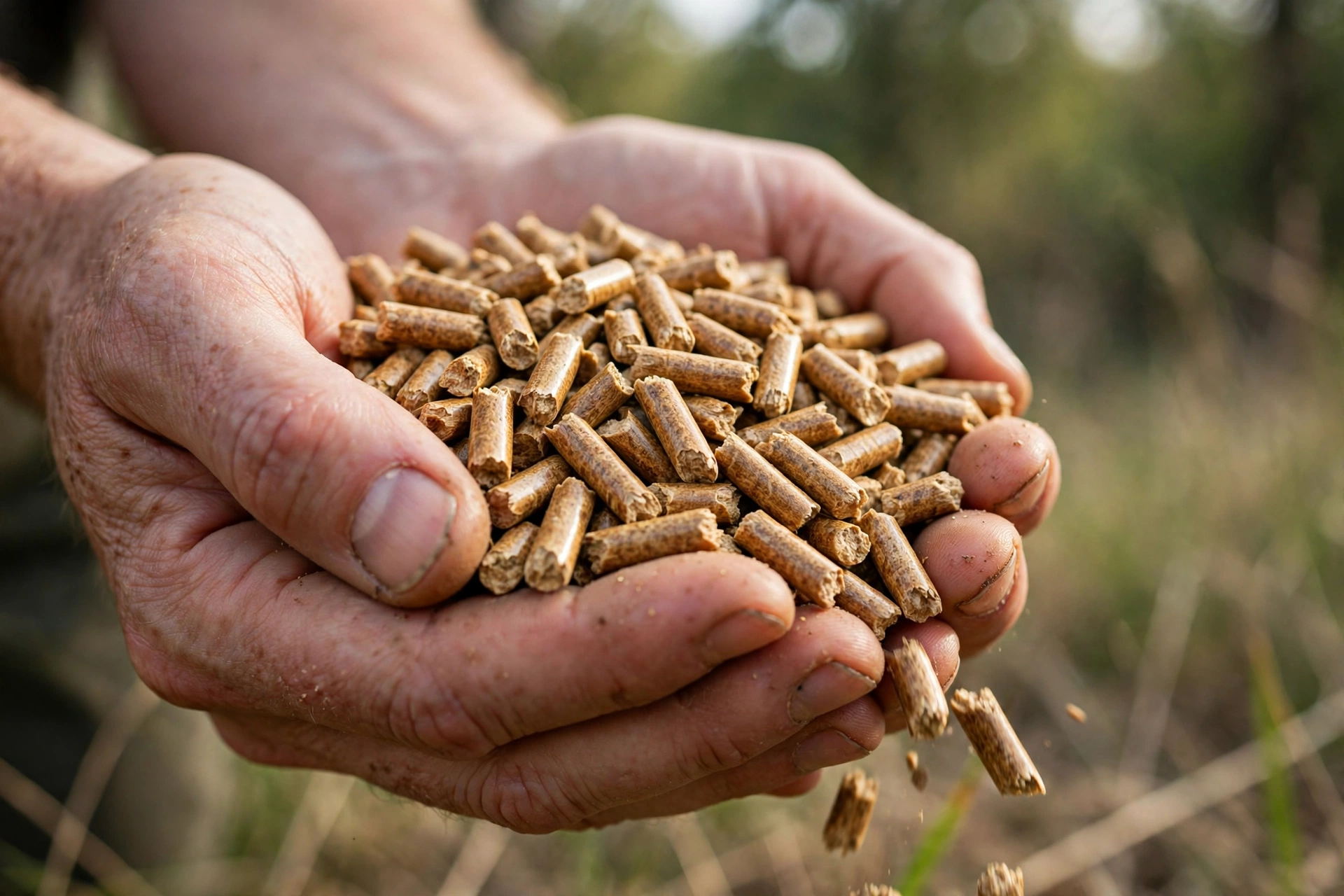
India burns a lot of coal to make electricity, and it is now being pushed to burn something cleaner alongside it: biomass pellets. The result is a market that needs far more pellets than the country produces, and that gap is filled by imports. This article explains what biomass pellets are, who supplies them to India, what the rules say, what quality buyers should look for, and what the trade costs — using only figures and facts that could be verified.
What Are Biomass Pellets?
Biomass pellets are a densified fuel made by compressing organic material into small, hard cylinders. In India they are usually made from agricultural residues such as rice husk, straw and cane trash, from forest residues, and from sawdust. Because they are dense and dry, they are cheaper to store and transport than loose residues, and they burn more evenly.
Their two main uses in India are co-firing in coal power plants — burning pellets together with coal — and process heat in industries such as textiles, food processing and brick making. For a power plant, pellets are not a replacement for coal on their own; they are blended into the existing coal stream to cut coal use and emissions.
Why India Has to Import Pellets
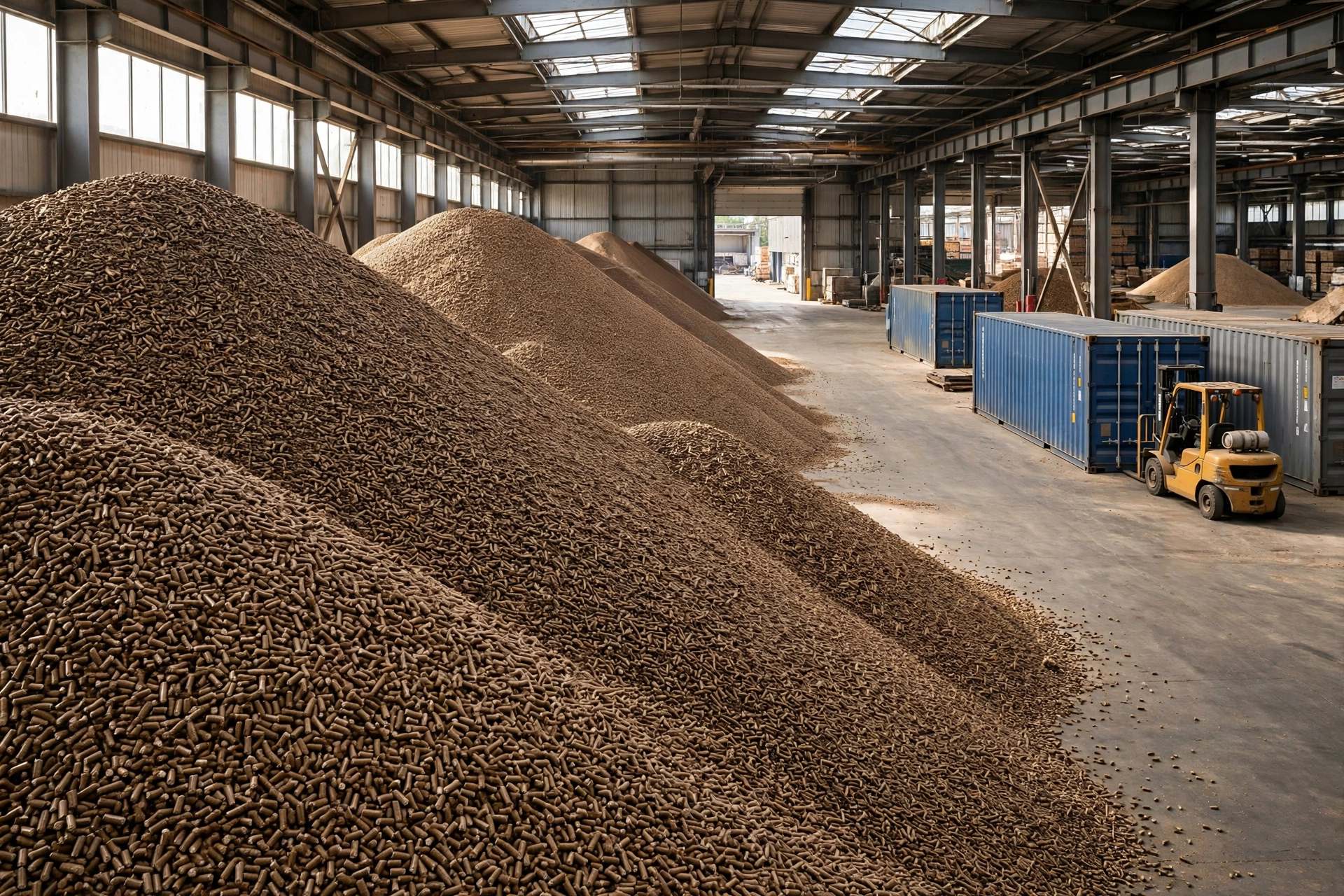
India is a net importer of wood pellets and other agglomerates: imports significantly overshadow exports. Domestic production exists, but it is fragmented, made up of small-to-medium operators clustered near feedstock belts in Punjab, Haryana and Uttar Pradesh. Those plants cannot deliver the consistent quality and volume that large buyers, especially power stations, need.
That mismatch is why international suppliers matter. Imported pellets arrive in standardised grades, in the volumes a power plant can plan around, and from suppliers used to shipping across borders. For buyers, the practical question is not whether imports are needed — they clearly are — but which suppliers to trust and what grade to buy.
Who Supplies Biomass Pellets to India?
The leading suppliers to India by import value, according to the IndexBox wood residues and pellets report, are Vietnam (about $1.2 million), China (about $1 million) and Indonesia (about $607 thousand). Together the three account for roughly 68% of total imports. A separate IndexBox report on wood pellets describes China as the dominant import source by value. Details on the supplier breakdown are set out in the IndexBox wood residues market report and the IndexBox wood pellets market report.
Other suppliers include Germany, Italy, the United States, Taiwan, France, Singapore and Bangladesh. The mix shows that India does not depend on a single country, although the top three dominate the trade. Buyers who want to diversify can look beyond the big three, but they should check that any new supplier can meet the same grade and delivery schedule.
For anyone weighing whether to manufacture rather than import, the practicalities of setting up a pellet unit are covered in the NIIR guide to biomass pellet manufacturing.
The Co-firing Mandate Is What Drives Demand
The main reason demand exists at this scale is government policy. The Ministry of Power’s revised co-firing policy made biomass co-firing mandatory in stages for all coal-based thermal power plants: 5% blending from financial year 2024-25, rising to 7% from FY2025-26. Plants in the National Capital Region (NCR) have a 7% target. The SAMARTH mission, launched in 2021, coordinates the use of biomass in thermal power plants. Pellets used for co-firing must meet the BIS 17062:2020 standard.
The policy has teeth. In December 2025, the Commission for Air Quality Management (CAQM) fined six thermal power plants in Delhi-NCR a total of ₹61.85 crore for missing their co-firing targets. That fine is a warning to every plant operator: the mandate is not optional, and a plant that cannot source enough suitable pellets is exposed to penalties. The supply gap behind that pressure is covered in the PelletRates report on India’s biomass pellet supply gap and the co-firing mandate.

What Quality Should Buyers Require?
A pellet that looks right can still fail in a boiler. Buyers should insist on the specification recommended under the Ministry of Power and SAMARTH framework: moisture content not more than 14%, gross calorific value of 2,800–4,000 kcal/kg, bulk density of at least 600 kg/m³, and fines below 3.15 mm of less than 5% by weight.
Moisture matters because wet pellets burn poorly and can rot in storage. Calorific value determines how much heat each kilogram delivers, so it decides how many tonnes a plant must buy. Bulk density affects transport cost, and fines — the dust and small fragments — matter because they can jam feed systems and create dust hazards. A supplier who cannot provide test certificates for these four numbers is not a supplier a power plant should rely on.
The Supply Gap and What Pellets Cost
The numbers explain why imports keep growing. Domestic production is about 2.5 million tonnes a year, while the co-firing mandate needs about 15–20 million tonnes a year — a deficit of roughly 12–17 million tonnes a year. That is not a small shortfall; it is most of the requirement.
Prices reflect that pressure. Pellet prices across the major producing states were about ₹7,500–₹10,500 per tonne in early 2026. Prices vary by state, feedstock and season, and buyers should expect to pay more for pellets that are certified to the required specification than for ungraded material. Imported pellets also carry freight and handling costs, so the landed price in India will sit above the price at the port of origin.
There is no reliable total market size in dollars and no verifiable growth rate to quote here — the available sources disagreed or gave no verifiable total — so this article does not claim one. What is clear is the direction: demand from the mandate far exceeds domestic supply, and that gap is the core of the import trade.
Subsidies and Finding Buyers
The Ministry of New and Renewable Energy (MNRE) runs the National Bioenergy Programme, which offers central financial assistance for pellet plants of about ₹21 lakh per MTPH, or 30% of plant and machinery cost, up to a maximum of about ₹105 lakh per project for non-torrefied plants. One honest warning is needed: as of October 2026, the MNRE BioURJA portal had stopped taking new applications until further notice, so the subsidy is not currently open to new applicants. Anyone planning a plant should check the current status before counting on it.
On the demand side, finding customers is straightforward: there is a public buyers directory listing 55 biomass pellet buyers and importers in India, available through TradeFord’s biomass pellet buyers list. For tax planning, biomass pellets sold to power plants attract 5% GST.
For more about this site, see the Kill Magazine homepage, the About page, and the Privacy Policy.
FAQs
India is a net importer: imports significantly overshadow exports, and domestic production — about 2.5 million tonnes a year from fragmented small-to-medium plants — cannot meet the 15–20 million tonnes a year the co-firing mandate needs.
By import value, the leading suppliers are Vietnam (about $1.2 million), China (about $1 million) and Indonesia (about $607 thousand), together roughly 68% of total imports. Germany, Italy, the United States, Taiwan, France, Singapore and Bangladesh also supply pellets.
The Ministry of Power made biomass co-firing mandatory for coal-based thermal power plants: 5% blending from FY2024-25, rising to 7% from FY2025-26. NCR plants have a 7% target, and pellets used must meet BIS 17062:2020.
Moisture not more than 14%, gross calorific value of 2,800–4,000 kcal/kg, bulk density of at least 600 kg/m³, and fines below 3.15 mm of less than 5% by weight.
Pellet prices across major producing states were about ₹7,500–₹10,500 per tonne in early 2026, varying by state, feedstock and season, before freight and handling on imported material. Biomass pellets sold to power plants attract 5% GST.


Leave a Reply